Key takeaways
Helping each baby feel known as an individual starts from the very early weeks
Small, regular moments of one-to-one attention make a big difference over time
You can support individuality while still celebrating the special bond between your babies
Simple habits now make later choices and independence easier for your children
Why individuality matters in your babies’ first year
From birth, all babies begin to build a sense of who they are. For twins or triplets, this is more complex because they share so much from the start. They arrive together, are often fed and changed together and may be spoken about as a set rather than as separate babies.
A close, loving relationship with you helps each baby feel safe and important. When you respond to their cues and comfort them, they learn that they matter as a person, not just as part of a pair or group. Over time this supports their confidence, learning and emotional wellbeing.
Children don’t fully realise they’re separate individuals until roughly between 18 months and three years. Even so, the habits you build in the first year lay powerful foundations for how they’ll see themselves later. You’re not trying to break their bond, but to show that each baby is both a unique person and part of a special team.
Don’t miss what matters
Get Twins Trust news, support updates and practical resources—straight to your inbox.
What shapes individuality in the first year
Many things influence how each baby’s identity develops. Your family life, support network, living space, finances and your own tiredness all play a part. Life with twins, triplets or more is busy and it’s not realistic to treat every baby differently all the time and that’s ok.
What matters is that, alongside all the shared care, there are regular moments when each baby feels seen as themselves. Small, repeated actions send strong messages that you notice them, that you understand their likes and dislikes and that they’re important in their own right.
Individuality doesn’t mean denying their comfort in being together. Many multiples settle better when they’re close in the first year. You can still respond to each baby’s cues within that closeness, for example by adjusting how you hold or soothe each one in the way that suits them best.
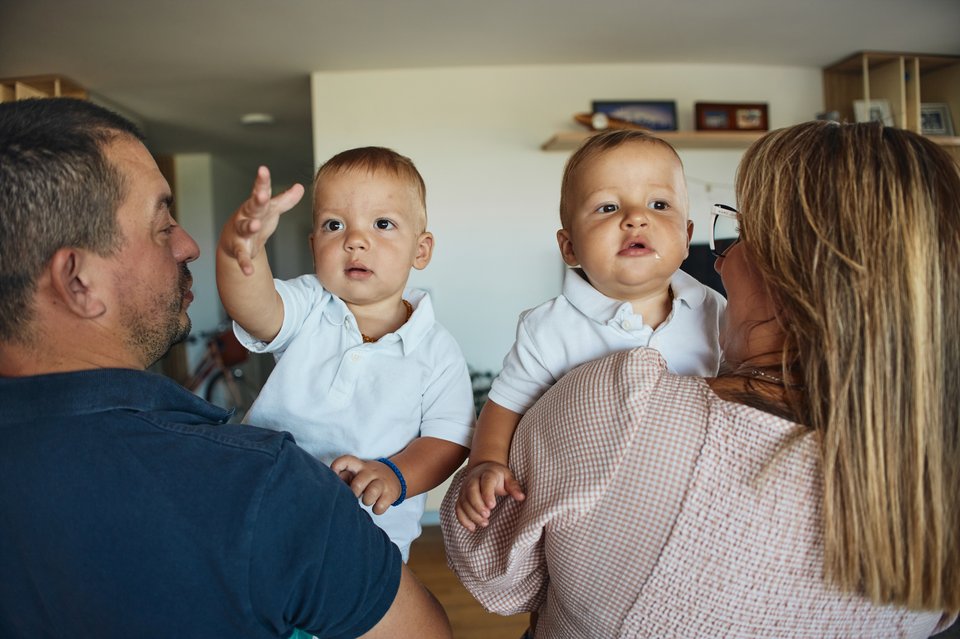
A simple place to start is with names and clothes. Using their individual names rather than saying ‘the twins’ helps you and others think of them as separate people. Dressing them differently at least some of the time, or choosing different colours, can also make it easier to notice small differences in expression and behaviour.
— Dr Joan Friedman, twin individuality expertThinking of your children as distinct individuals from the moment you are told you’re pregnant with twins will ensure that they think of themselves as unique.
Get more from Twins Trust
Free membership gives you access to additional resources and practical guides.
Practical ways to support each baby’s identity
You don’t need long stretches of free time to support individuality. Short, regular one-to-one moments are enough, especially in the first year when you’re already stretched. Here are ideas that can work in everyday life:
- Spend a few minutes alone with one baby, even if that just means stepping into another room for a cuddle or story while the other baby is with another trusted adult
- Build one-to-one attention into everyday care, like talking gently to each baby in turn during nappy changes or baths
- Use each baby’s name often and make eye contact when you talk to them so they feel you’re focused on them
- Create tiny rituals that belong to each of you, such as a special song, rhyme or gentle game you always share with that baby
- Take individual photos as well as joint ones and note who is who, so you can look back together and talk about their own story
- Offer very simple choices towards the end of the first year, such as two different toys and respect which one each baby reaches for
You can also give each baby a small space that’s just theirs, even if you live in a small home. This might be a box or basket where their own special things are kept and not shared. Try not to compare your babies to each other, especially around milestones like rolling, sitting or first words. Instead, notice and describe what each is doing in their own time.
Being kind to yourself while you support their identities
The first year with twins or triplets is demanding. There will be days when everyone wears matching babygrows, you use the same routine for both babies and one-to-one time feels impossible. You’re not letting them down; you’re doing your best at a very intense time.
It helps to focus on the overall pattern rather than on individual days. If, over time, you tend to use their names, offer short bursts of individual attention and allow small differences in clothes, toys or routines, then you’re already giving them a strong start. Those small efforts build up into a clear message that each baby is valued for who they are.
You don’t have to choose between their special bond and their individuality. By building simple habits in the first year, you give your children two precious gifts at once: the security of being part of a close sibling team and the confidence of being recognised and loved as themselves.
Published