Key takeaways
Remember each baby has their own sleep pattern
Small changes to routines or sleep spaces can really help
Looking after your own rest is part of supporting your babies
It is ok to ask for extra sleep support when you need it
Sleep can feel like the biggest puzzle when you have twins. You finally get one baby settled, then the other one stirs and the whole thing starts again. Even though your babies arrived together, they are still two unique little people and their sleep will show that.
Babies sleep in short cycles and wake often, especially in the early months. With twins, triplets or more, it is very common for one baby to sleep longer or settle more easily than the other. Knowing this is normal can ease some of the pressure and help you focus on what works for your family, rather than what you feel you ‘should’ be doing.
For the first six months, it is recommended that your babies sleep in the same room as you, day and night. After that, you might notice that one baby regularly wakes the other or needs a different settling style. That is when you can gently experiment and see whether different sleep spaces or routines work better for everyone.
What to keep in mind about your babies' sleep
One of the most helpful things you can do is watch each baby’s individual sleep cues. Rubbing eyes, yawning, going quiet, getting a bit wriggly or pulling at ears can all be signs that sleep is on the way. These cues might look different for each child, so you are really getting to know two sets of signals.
Daytime sleep plays a big role too. Plenty of parents worry if naps do not always line up, but it can help simply to aim for at least one nap a day in a calm sleep space. Other naps can be on the go in the pushchair, in the car or as contact naps in your arms. Rest is rest, and you are not getting it “wrong” if it does not all happen in a cot.
A simple, calm bedtime routine can also make evenings feel more predictable. Think short and sweet rather than complicated. You might dim the lights, change nappies, have a short cuddle or story, then a feed. A bath can be lovely, but it does not need to happen every night. If your babies tend to fall asleep on the last feed, you could try offering part of it earlier in the routine and the rest just before you put them down, so they are drowsy but not fully asleep.

The bedroom itself can support sleep too. A comfortable temperature, soft lighting and as few distractions as possible all help. Many families find gentle white noise or a low-level background sound soothing, especially if you keep the same sound going through the night so changes do not disturb your children when they stir between sleep cycles.
Finally, a fairly consistent morning wake-up time can guide their body clocks. Thinking of the day in two loose twelve-hour blocks, one for day and one for night, can help your babies gradually learn the difference between daytime naps and night sleep.
Different ways to support each twin at night
There is no single ‘right’ way to manage sleep with twins. Some families keep both babies in the same room, others find that once they are past the six-month-old stage, separating the lighter or heavier sleeper helps everyone. You know your space and your children best, so you can choose what feels realistic.
Keeping a simple diary of sleep and feeds, even just for a week or two, can be surprisingly reassuring. You might start to spot patterns, like one baby always ready for a nap after a certain feed or both babies tending to sync one nap a day. These small clues make it easier to plan your day and decide when to try settling them together.
Sleep expectations mini-course
Learn more about sleep in the first year, including night waking, changing routines and the factors that can affect sleep for twins, triplets or more.
Sleep props like dummies, rocking, cuddling or feeding to sleep are all tools you are allowed to use. If any of them begin to feel too demanding to keep up, you can slowly swap them for something gentler, such as a shorter cuddle, a hand on their chest or a consistent lullaby. Little changes over time are often easier on everyone than big overnight shifts.
It also helps to share the load at night where you can. Partners or other caregivers might take turns settling between feeds, change nappies or make sure the feeding parent has water and snacks close by. Small practical jobs can make those broken nights feel that bit more manageable.
Remember that sleep can go off track during teething, growth spurts or illness. Twins may not go through these patches at the same time, which can be tiring, but it will pass. Responding to each baby’s needs and offering comfort when they are unsettled helps them feel safe and makes it easier for sleep to settle again when they feel better.
Real stories from your community
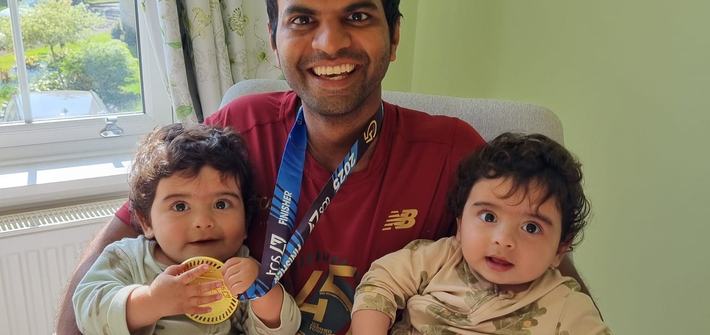
Twin sleep routine tips: teamwork that helped new parents cope
Twin parents Rayid and Rachel share how a solid sleep routine, teamwork and planning ahead helped them manage the challenges of twin parenthood, with tips on synchronized feeding and using …
Building confidence in your family's sleep journey
Caring for two newborns is a huge job, and frequent waking is completely normal. Whenever possible, try to plan pockets of rest for each caregiver, accept offers of help and let some non-essential tasks slide. You are learning on the job and that is more than enough.
As your twins grow, their sleep will keep changing. Some stages will feel tough, others easier, and all of them temporary. Over time, you will build a clearer picture of what works for your family’s evenings and nights, and many parents find that things gradually become calmer and more predictable.
You are the expert on your children, even on the days when you feel anything but. With time, gentle tweaks and support when you need it, you will find a sleep rhythm that works for your whole family.
Support for our Premium Members
If you feel you would like extra guidance, Premium Members can access a range of resources and support to help with this stage of your journey.
Our sleep under-1s expert drop-in offers the chance to talk through your children’s sleep with sleep experts and connect with other families in a similar position.
The sleep expectations on-demand mini-course and sleep expectations factsheet [opens as PDF] can help you understand what is typical from newborn to twelve months, with ideas for how to adapt as your babies grow.
If you're not yet a Premium Member, you can join now to access all this and more.
You belong here
Our community of families with twins and triplets is unique. We lean on each other, cheer for one another and together we're stronger. Join today as a Free or Premium Member.
Published