Key takeaways
Prepare your older child / children early and involve them in welcoming the twins
Introduce each baby separately so your older child or children sees them as individuals
Give your older child simple, age-appropriate ways to help with the babies
Protect regular one-to-one time so your older child still feels special
Helping your older child adjust to newborn twins
Welcoming twins into your family is a big change for everyone. For an older child or children, it can feel exciting, confusing and, at times, quite worrying.
They’re suddenly sharing you, your time and your attention with not one but two babies. It’s natural for them to feel jealous, unsettled or pushed out.
With a bit of preparation and plenty of reassurance, you can help your older child feel included and important as you welcome your twins, triplets or more. Small, consistent steps often make the biggest difference.
Key things to consider before the babies arrive
It helps to start preparing your older child during pregnancy. Talk about the babies in simple, honest language and check in with how they’re feeling. Let them know it’s okay to feel a mix of excitement and worry.
Involve them in age-appropriate decisions so they feel part of the plan rather than on the outside looking in. You might:
- Chat about name ideas and listen to their suggestions
- Ask their opinion on colours for the babies’ room or bedding
- Let them help choose a special outfit or sleeping bag for bringing the babies home
Books and TV can be useful tools. Stories about becoming a big brother or sister, or children’s programmes that show older siblings helping with babies, can open up gentle conversations. You could also arrange playdates with friends who have younger siblings, so your child can see what life with a baby can look like.
When the babies are born, a small ‘welcome present’ from the twins to their big brother(s) or sister(s) can help your older child feel noticed. If your babies are well and your hospital allows, bringing your older child in to meet them can be very special.
Try to introduce the babies one at a time. Saying, for example, “This is your baby brother” and then “This is your baby sister” helps your child see two individual babies rather than a single ‘twin unit’.
Don’t miss what matters
Get Twins Trust news, support updates and practical resources—straight to your inbox.
Practical ways to involve your older child with the twins
Once you’re home, giving your older child a role in caring for the babies can help them feel proud instead of pushed aside. What this looks like will depend on their age and personality.
Younger children might enjoy simple jobs such as fetching nappies or wipes, choosing which babygrow to wear or gently talking to a baby who’s crying. Older children might help pack the changing bag, push the pram for a short distance or choose a lullaby to sing.
Feeding time can be tricky with twins, as it naturally pulls a lot of your focus. Turning it into a special moment for your older child too can really help. You could keep a basket of ‘feeding time toys’ or books that only come out while you’re feeding and invite your older child to snuggle up for a story.
Some families find it helpful to buy a toy doll, pram or sling so their child can ‘feed’ or ‘settle’ their baby while you care for the twins. This kind of play lets them copy you and feel included.
We took it in turns to have a couple of hours away with our oldest each weekend. Sometimes we went swimming, sometimes just for hot chocolate and a chat. That regular one-to-one time helped her stay close to us while the twins needed so much care.
Get more from Twins Trust
Free membership gives you access to additional resources and practical guides.
Keeping your older child seen and heard
It’s easy for twins to become ‘the twins’ in everyday conversation. Try to use their names and talk about them as individuals when you’re with your older child. This can stop them feeling outnumbered or pushed into the background.
If you have support from a partner, grandparent or friend, you might take your older child out with just one baby at a time. This gives them a chance to get to know each baby separately and to feel like part of a small team, not always one against two.
Once you’re out and about with both babies, you’ll probably notice extra attention from other adults. Visitors and strangers often focus on the twins and bring gifts just for them. When that happens, try to bring your older child into the conversation by asking their opinion or inviting them to ‘introduce’ the babies. Some parents like to keep a few small, wrapped gifts aside so that if people arrive with presents for the twins, there’s something for the older child too.
At home, it can help to protect pockets of one-to-one time. This doesn’t have to be a big day out. It might be drawing together at the table, a short walk, a film and a cuddle during nap time or a special bedtime routine when someone else is holding the babies. What matters is that your child knows this is ‘your time together’.
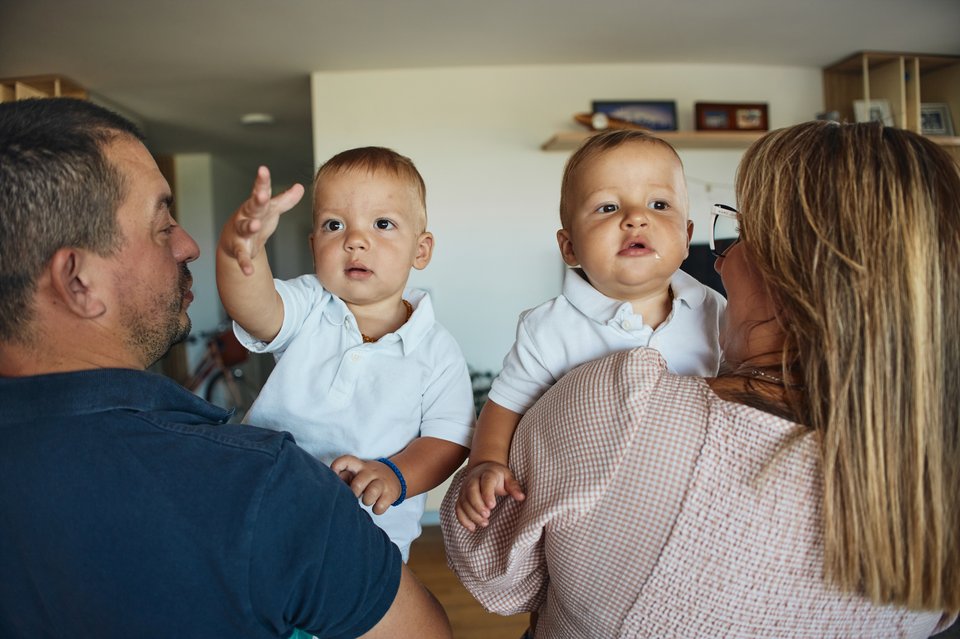
Reassuring your older child and looking after yourself
Even with lots of planning, there’ll be days when your older child acts out, refuses to help or says they don’t like the babies. This is a normal reaction to a big change, not a sign that you’ve done anything wrong.
Keep your messages simple and consistent. Remind them that they’re still loved, still important and that it’s okay to miss how things were before. Naming their feelings and listening to their worries often helps them settle more quickly.
Looking after yourself matters too. Life with twins is intense and it’s easier to support your older child when you have even small chances to rest and reset. Accept offers of help where you can, especially with jobs like cooking, washing or school runs.
You know your family and your older child better than anyone. By involving them in the build up, giving them a clear role and protecting special time together, you can help them grow into their new role as a big brother or sister with confidence and pride.
Published