For parents of multiples, sleep can feel like a distant memory. Parenting one newborn is hard enough; parenting two, three or four at once brings very real challenges that are often misunderstood by others.
I’m a maternity nurse, sleep consultant, and mum of triplets. The guidance below comes from both professional experience and lived reality. My approach is always responsive and gentle: nurturing your babies, supporting your wellbeing, and responding to needs - without chasing perfection.
Expectations and realities
Start with realistic expectations. From day one, life changes dramatically, and babies need feeding around the clock. Broken sleep is inevitable - but it can become more manageable when you:
- share shifts with a partner/support person where possible
- accept help when it’s offered (meals, laundry, holding a baby while you rest)
- avoid comparisons with singletons (or even with other multiples)
In the early days, focus on what works for your family. You’re already doing brilliantly by adapting to a unique situation.
Sleep expectations mini-course
Learn more about sleep in the first year, including night waking, changing routines and the factors that can affect sleep for twins, triplets or more.
Sleep basics for your family
Sleep is an automatic behaviour driven by the build-up of “sleep pressure.” Babies don’t need to be trained to sleep - but they often need help to settle.
With multiples, small changes to environment and routine can make a big difference. One of the most effective early steps is teaching the difference between night and day:
- Daytime: bright light, normal household noise, interaction
- Night-time: dim light, quiet voices, low stimulation
Simple, effective - and achievable even when you’re exhausted.
Feeding foundations
Good sleep starts with good feeding. Multiples often need efficient feeding (breast or bottle), so aim to help each baby feed well at each opportunity:
- encourage full feeds where possible (rather than constant snack-feeding)
- wind thoroughly
- keep “make every feed count” as your mantra
A hungry baby won’t sleep well and staggered hunger across multiple babies can quickly become overwhelming.
Synchronised feeding can be a game-changer. In the early weeks, this may mean gently waking the second (or third) baby to feed after the first. It can feel counterintuitive, but it often protects your rest and helps create predictability.
The gentle routine
Rigid schedules rarely suit multiples. Instead, aim for a gentle, predictable flow to your day:
- watch cues and rhythms
- nudge naps closer together over time
- keep bedtime consistent where you can
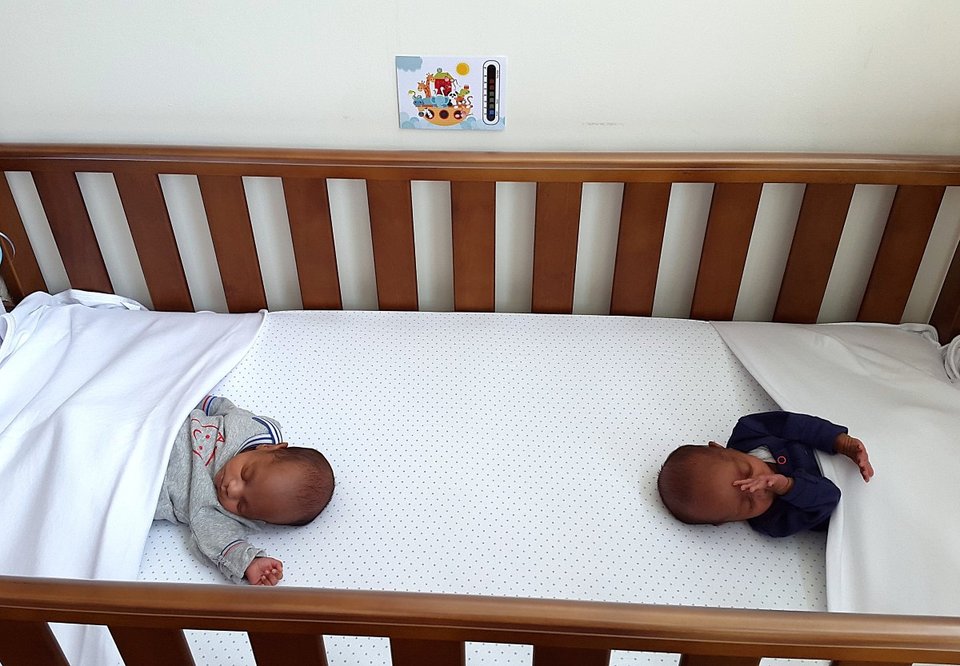
A simple bedtime ritual helps babies recognise what’s coming next. For example: warm bath (if it works for your family), dim lights, a feed, cuddles, a lullaby or quiet phrase - then into the cot.
Sleep associations: friend or foe?
Sleep associations (sometimes called “props”)—like feeding to sleep or relying on a dummy - can create dependencies. With multiples, those dependencies can feel magnified at night.
If you want to build gentle sleep independence, try placing your babies down drowsy but awake when you can, and use a responsive technique such as:
- gradual retreat (stay close, then slowly reduce support)
- pick up/put down (comfort, then settle back in the cot)
If you use dummies, keep several in reach to avoid late-night searches.
The power of the pause
With multiples, every sound can feel urgent. Before you leap up, try a brief pause to observe and listen.
Babies have needs, not wants, and crying is communication - but not every stir means they need immediate intervention. A short pause can give them the opportunity to resettle, supporting gentle sleep independence over time.
Real stories from your community
What helped our family when our twins' sleep routine changed
When David’s twin girls started refusing bedtime, he knew their routine had to change.

Settling multiples
Gentle, consistent techniques can work wonders. With gradual retreat, you:
- place babies down awake
- stay close and offer calm reassurance
- slowly reduce your input over days/weeks
Patience and consistency matter more than perfection.
You can find more detail on settling approaches in my book, The Baby Sleep Guide.
Survival tips for parents of multiples
Support isn’t a luxury - it’s essential. Lean into your community: family, friends, health visitors, and local multiples groups. Accept practical help without hesitation.
And celebrate the small wins: every synchronised nap, every calmer bedtime, every slightly longer stretch of sleep counts. Peaceful nights aren’t just a dream - they’re an achievable reality, one step at a time.
Connect with other parents
Our online communities are by you and for you. They're here to offer support and shared understanding for parents of twins, triplets or more.
Published