Key takeaways
Getting everyone fed, safe and loved each day is enough
Accepting help early makes life at home more manageable
Simple rhythms and shared shifts protect everyone’s sleep and sanity
Small moments of connection build strong bonds over time
Finding your feet with newborn triplets
Bringing triplets home is a huge transition. The days and nights can feel like an endless loop of feeding, winding, changing and soothing. Many triplets arrive early and it’s common for one or two babies to come home before the others.
You might be bonding with a baby at home while travelling back and forth to visit another baby in neonatal care. That emotional split can feel intense. You’re celebrating one homecoming while worrying about a baby who’s still in hospital.
Every family of twins, triplets or more finds its own way through this. Some parents take turns visiting the hospital while the other stays home. Others lean heavily on relatives, friends or volunteers to help with childcare, lifts or meals. However you juggle it, remind yourself this setup is temporary. In time, each of your babies will be at home with you.
Try to let go of the idea of doing everything perfectly. In the early weeks, simply getting through the day and keeping everyone safe and fed really is enough. Surviving is absolutely succeeding.
Don’t miss what matters
Get Twins Trust news, support updates and practical resources—straight to your inbox.
Managing home, hospital and your own wellbeing
Triplet parents often say that accepting help earlier would have made life easier. Extra hands can give you space to rest, recover and respond to your babies more calmly. Help might look like:
- Someone making a meal or tidying the kitchen so you don’t have to
- A friend pushing the pram so you can get some fresh air
- A relative tackling the washing pile
- A volunteer holding or feeding a baby while you settle the others
Your support network isn’t there to judge your parenting or your home. They’re there to give you breathing room. You can read more in our article ‘how to ask for, and accept, help’ (LINK).
Looking after your emotional health matters too. Talk openly with your partner, if you have one, about how you’re both coping. You might not feel ready to do a feed alone at first, and that’s okay. As your babies grow and you get to know them, your confidence will build. If tensions or worries between you keep bubbling up, it can help to seek support from counselling services such as Relate sooner rather than later.
Get more from Twins Trust
Free membership gives you access to additional resources and practical guides.
Practical ways to create rhythm and bond with each baby
With three babies, routines can really help. Think of them as gentle rhythms rather than strict schedules. Watching your babies’ cues will help you respond to their needs while slowly bringing their patterns closer together.
Practical ideas to shape a gentle rhythm:
- Synchronise feeds when you can, feeding the others soon after the first wakes so you avoid constant separate feeds
- Get feeding essentials ready in advance, like bottles, breast pumps, muslins and burp cloths
- Set up small ‘zones’ at home for changing, feeding and safe resting so you can move smoothly between tasks
- Simplify nights with soft lighting, pre-prepared feeds and a comfortable chair to make things calmer
Some days will feel organised, others will feel messy. Both are normal.
Crying can be especially overwhelming with three babies. Remember you’re not doing anything wrong; crying is how newborns communicate. When everyone is unsettled, start with the basics: are they hungry, tired, windy or in need of a nappy change?
Soothing strategies can include using a sling for one baby so your hands are free for the others, trying the pram for gentle rocking, or offering dummies if you’re comfortable. Soft music, gentle background sounds or baby-safe white noise can also help, as long as you follow safety guidance for volume and distance.
If one baby is more distressed, it’s okay to start with them. You’re only human, and triage is part of caring for triplets. When the noise feels like too much, it’s also okay to pause. If everyone is safely in their cots, stepping into another room for a minute can really protect your own wellbeing.
Bonding doesn’t have to be perfect or long. It can happen in tiny pockets of time. A few minutes of skin-to-skin, chatting during a nappy change, holding one baby while the others nap, or taking turns with a partner or helper for one-to-one cuddles all add up. Over time, these small, repeated moments build strong, secure attachments.
Parents of triplets often find sleep works best in shifts. One person might handle the bedtime feed while the other covers the early morning. Some families have one adult sleep in the babies’ room while the other sleeps elsewhere for a stretch of uninterrupted rest. Earplugs during your sleep shift can help you really switch off and trust your partner to cope.
Tomorrow’s another day – if you’ve had a hard day with your routine, you can make a fresh start tomorrow.
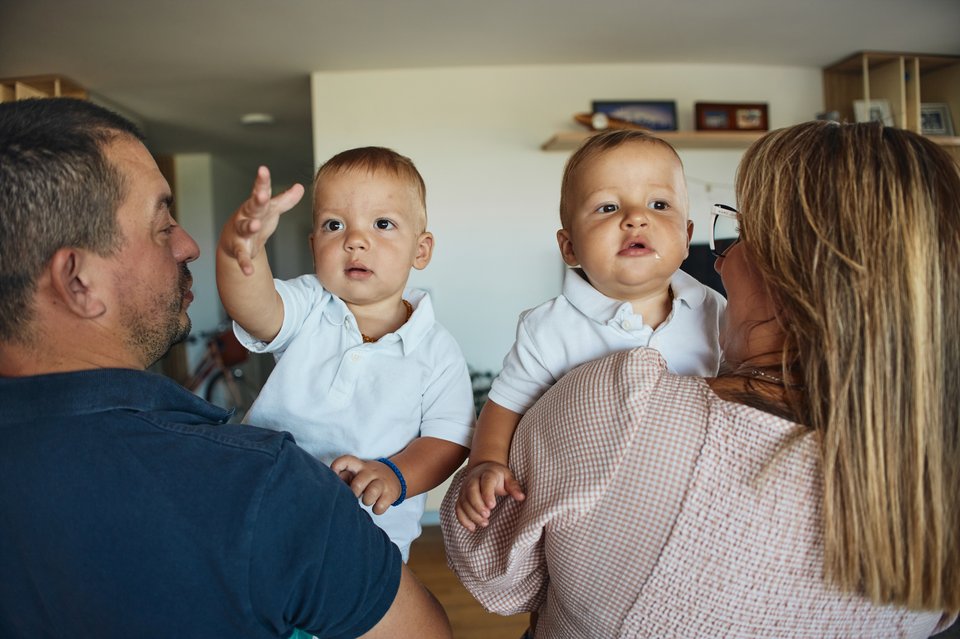
Moving forward together as a family
Surviving the early months with triplets isn’t about running a perfect routine. It’s about finding a rhythm that works for your family, accepting help, and celebrating the small wins. Over time, feeds and sleeps usually become more predictable. Many parents notice that a sleeping routine starts to fall into place a little later, once feeding is more settled.
Be prepared for things to change as your babies grow. What works this week might need tweaking next month, and that’s not a failure. Keep talking to each other, work as a team and try to offer each other unconditional support, even when you’re tired and snappy. Every day really is a new day.
You’re raising three unique individuals and building many separate relationships, all at once. Three babies are hard work! Even on the days it doesn’t feel like it, you’re doing something extraordinary.
Published