Key takeaways
TTTS is a rare but serious condition when your babies share one placenta
One baby gives away blood while the other receives too much, affecting both hearts
Regular ultrasound and doppler scans help diagnose TTTS early and guide treatment
Specialist care, timely treatment and good self-care can improve outcomes for your babies
What twin-to-twin transfusion syndrome means
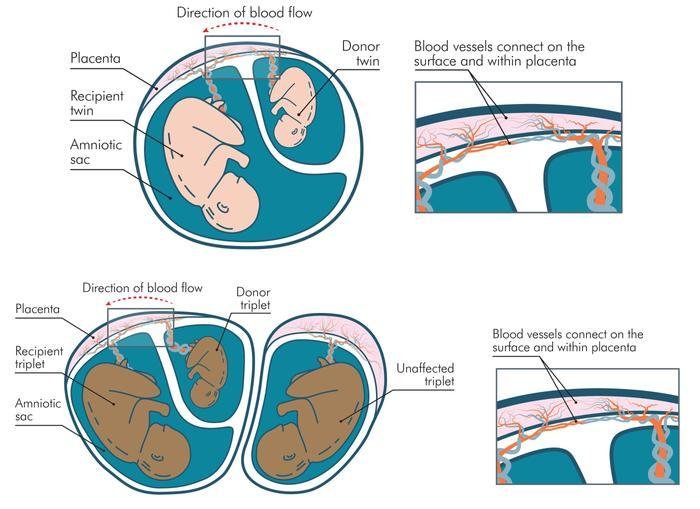
Twin-to-twin transfusion syndrome, or TTTS, is a rare but potentially life-threatening condition. It affects pregnancies where identical twins, or sometimes triplets or more, share a single placenta. These are called monochorionic pregnancies.
Around 10% to 15% of monochorionic twin pregnancies develop TTTS. It can happen at any point in pregnancy, but it’s most often diagnosed before twenty four weeks.
In a shared placenta pregnancy, there are blood vessels that connect the placenta and your babies. Usually, blood flows fairly evenly between them, so each baby gets what they need. In TTTS, some of this blood flow is uneven. Blood is redirected from one baby, known as the ‘donor’ twin, to the other, called the ‘recipient’ twin.
The ‘recipient’ baby has to cope with extra blood. Their body often produces more urine, which becomes amniotic fluid, so the fluid around them increases. The ‘donor’ baby may have very little fluid, sometimes becoming stuck against the wall of the womb because there isn’t enough space to move.
Your doctors use regular growth and doppler scans to look out for these changes. Attending every scan you’re offered is one of the most important ways you can help protect your twins, triplets or more.
Recognising signs and risks of TTTS
TTTS is usually first picked up on routine ultrasound scans rather than through symptoms you feel. If your babies share a placenta, your team should monitor you closely for TTTS throughout pregnancy.
Sometimes, though, TTTS can progress quickly between scans. If you’re known to be at risk and you notice changes, it’s important to contact your maternity team straight away. Signs to look out for include:
- Rapid tummy growth or suddenly feeling much larger than expected, sometimes within one day
- Increased discomfort, bloating or shortness of breath
- Having palpitations, where your heart feels like it’s racing or pounding
- Increased thirst, early tightenings or contractions
- New back or leg pain linked to a build up of fluid
These symptoms can also happen in healthy pregnancies, so try not to panic if you notice them. Getting checked means any complications, including TTTS, can be picked up and managed early.
Left untreated, TTTS can put both babies at risk. The ‘donor’ baby may become smaller and struggle to get enough nutrients and oxygen. The ‘recipient’ baby can develop heart strain because of the extra blood and fluid. Once TTTS is confirmed, it’s graded into stages, from mild to more severe, to help guide decisions about treatment.
Don’t miss what matters
Get Twins Trust news, support updates and practical resources—straight to your inbox.
Treatment choices for TTTS during pregnancy
If TTTS is diagnosed, you should be referred to a specialist fetal medicine unit. The team there will be experienced in managing complex twin and triplet pregnancies.
Your treatment plan will depend on how severe TTTS is, the stage of pregnancy and how each baby is coping. In some cases you may be offered close monitoring, while in others active treatment is recommended.
Close monitoring is often used for mild, stage one TTTS. You’ll have frequent ultrasound and doppler scans so your team can track growth, amniotic fluid levels and heart function.
Amnioreduction
In some pregnancies, doctors may remove excess amniotic fluid from around the ‘recipient’ baby. This is called amnioreduction. A fine needle is passed through your abdomen into the womb to drain some fluid.
Amnioreduction doesn’t correct the underlying cause of TTTS, but it can ease pressure on your womb. It may give the ‘donor’ baby more room to grow and reduce the risk of very early labour. It’s usually used in later pregnancy and in less severe stages, and sometimes needs to be repeated if the fluid builds up again.
Laser surgery (fetoscopic laser ablation)
Fetoscopic laser ablation is currently the most effective treatment for more severe TTTS, especially stages three and four. In this procedure, doctors find the blood vessels on the placenta that connect your babies and seal them with a laser.
The surgery is usually done under local anaesthetic or a spinal, so you’re awake but your tummy is numb. A needle and thin hollow tube are placed into the sac around the ‘recipient’ baby. The needle is removed and a small telescope, called a fetoscope, is passed through the tube. The laser seals the connecting vessels so that each baby is supplied only through their own umbilical cord. Extra fluid around the ‘recipient’ baby is often drained at the same time.
In around 73% of cases, at least one baby survives after laser treatment. Outcomes are usually better when TTTS is spotted and treated early, which is why regular scans matter so much.
Early delivery
If TTTS is diagnosed later in pregnancy, or if it’s progressing despite treatment, your doctors may recommend delivering your babies early. They can then be monitored and treated in the neonatal intensive care unit.
You’ll be involved in all decisions about timing and type of birth. If early delivery is likely, you should be offered steroid injections to help your babies’ lungs mature before birth.
Looking after yourself and finding support
A TTTS diagnosis can feel overwhelming, frightening and unfair. It’s completely normal to feel anxious, sad or confused while you take in lots of information. None of this is your fault, and you deserve clear, kind support.
Try to focus on practical steps you can take. Go to all your appointments, eat as well as you can, stay moderately active if it feels comfortable and rest often. Our pregnancy tracker (LINK- antenatal care checklist) can help you keep on top of the appointments and tests you should expect throughout pregnancy.
Talking through your options with your fetal medicine team can help you feel more in control. Ask them to repeat or explain anything that isn’t clear. You have the right to be involved in decisions about your care, your hospital and your treatment plan.
If you’re worried about symptoms, or something just doesn’t feel right, contact your midwife, doctor or maternity triage straight away. Reaching out early means your team can check you and your babies and offer the best possible care at every stage.
Get more from Twins Trust
Free membership gives you access to additional resources and practical guides.
Published