Key takeaways
Most children move from cot to bed when they can climb out or are close to doing so
Involving your children in choices like bedding can make the change feel fun and positive
A fully child-proofed bedroom is essential once twins or triplets can get out of bed and play
The first few nights are often unsettled, but calm consistency helps your children learn to stay in bed
Deciding when to move your twins or triplets from cots to beds
Moving your children from cots to beds is a big milestone for them and for you. There is no single right age and the best time will be slightly different for every family.
Many children move from cot to bed somewhere between 18 months and three years. Often the trigger is that your child is starting to climb or attempting to climb out of the cot. At that stage the risk of a fall can outweigh the benefits of keeping them in a cot.
If your toddlers are not yet climbing, you might choose to wait a little longer. Older toddlers usually understand more, so it can be easier to explain when they should stay in bed and when it is time to get up.
Your own situation matters too. You may be expecting another baby who will use the cot, or you may want to move your children at the same time to keep things simple. Trust that you know your family and that you can make a safe, thoughtful choice that works for you.
Don’t miss what matters
Get Twins Trust news, support updates and practical resources—straight to your inbox.
Preparing a safe and calm bedroom for new beds
Before you move your toddlers into beds, it helps to think through safety, routine and temperament. Safety comes first, because once children are in beds they can move freely around the room.
Check that furniture is secured to the wall so it cannot be climbed on or pulled over. Tie up blind cords, keep loose wires out of reach and remove breakable or heavy items within reach. Make sure the floor is clear to avoid trips and falls, cover hot radiators and lock or secure windows. Keeping electrical items well away from little hands will also help the room stay safe.
You might find it useful to crouch or crawl around the room and look from your children’s level. This simple check often reveals tempting objects or hazards you might otherwise miss. Some families also choose to use a stair gate at the bedroom door or at the top of the stairs, especially if they worry their children might wander once everyone is asleep.
A familiar bedtime routine can make the move feel calmer. Something simple, such as a bath, pyjamas, a story and cuddles, can be very soothing. If you change the cot and the routine on the same night, it can feel like a lot for small children to manage. Keeping the routine the same while the sleeping place changes often makes the transition smoother.
Your children's personalities also play a part. Some children love the idea of a ‘big bed’ and may keep jumping out to play with their sibling. Others may feel unsettled or need extra reassurance. Neither reaction is wrong. You can adapt your approach to each child while still keeping clear, shared boundaries.
Get more from Twins Trust
Free membership gives you access to additional resources and practical guides.
Practical ways to manage the move to beds
Involving your children can make the move feel exciting rather than scary. You might let them help choose new bedding or a special soft toy that will stay on the bed. Talk about the change during the day, not just at bedtime, so they have time to ask questions and know what to expect.
On the first few nights, explain the new rules in simple, calm language. You might say, “It is time to stay in your bed now. We will see you in the morning”. If they get out of bed, gently return them with as little fuss as possible. Using the same words and the same actions each time helps them learn what will happen.
It is normal for the first few nights to feel unsettled. They may climb into each other’s beds, whisper, giggle or get up to play. If you can, keep your response calm and predictable. Go back in, settle them and leave again. Try not to bring them into your own bed or stay for "just one more" story, unless you are happy to continue with that pattern in the long term. This can help you avoid new sleep associations that are hard to keep up. Over time, most children begin to stay in bed for longer stretches and sleep will usually improve again.
You also do not have to move all children at exactly the same time. If one is climbing and the others are not, you might move the climber first or use a mattress on the floor for a short period. You may also have one or more child with additional needs which will affect the choices that you are able to make. Choose the option that feels safest and most manageable for you. It can help to think of the cot to bed move as a gradual learning process rather than a one-night event.
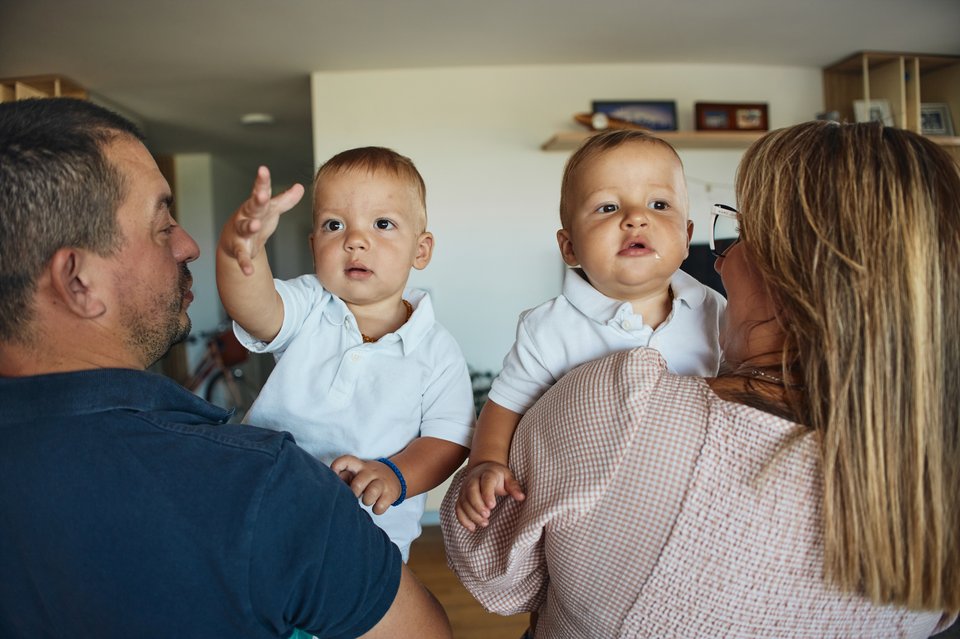
Supporting your twins, triplets and more as they settle into their new beds
Your calm, confident approach makes a big difference. Even if bedtime feels chaotic at first, you are helping your children learn an important new skill.
You can help your toddlers feel secure by keeping as many things as possible the same. Try to place the beds in the same room, in a similar position, to where the cots were.
This will help to keep as much of the environment as similar and reassuring as possible. If your children usually sleep in sleeping bags, you can keep using these in their beds to make the change gentler. Use their familiar comforters, favourite bedtime stories and usual goodnight phrases. Notice and praise small steps, such as staying in bed for a little longer or settling more quickly after being returned to bed.
You might find it helpful to run through a quick safety check before the first night:
- Look for hazards at your twins’ level and secure heavy furniture
- Make sure any baby monitor and its cables are positioned safely out of reach
- Agree with your partner how you will respond if your children get out of bed
If the move feels particularly challenging, you could speak to your health visitor or GP for reassurance and extra support. You know your children best and you are allowed to take things at your own pace. With time, consistency and lots of gentle encouragement, most children adjust well and enjoy the independence of their new beds. You are doing something big for your family.
Published