Key takeaways
Use each child’s name and ask others to do the same
Gently challenge labels and comparisons when you hear them
Share one small, unique detail about each child when you introduce them
Celebrate their bond while making space for who they are as individuals
Why it matters that others see your children as individuals
When you have twins, triplets or more, people often see ‘a set’ before they see two or three very different little people. That can feel special, but it can also blur the lines of where one child ends and the other begins.
Children build their sense of self through everyday relationships. When they are noticed and valued as unique, they are more likely to grow into confident, emotionally secure adults who can cope with change and challenge. For multiples, the basics are the same as for any child, but the world’s habit of treating them as a unit means you may need to be a bit more intentional.
Don’t miss what matters
Get Twins Trust news, support updates and practical resources—straight to your inbox.
How other people’s attitudes shape your children’s self-belief
It is not just home life that shapes identity. Grandparents, wider family, friends, nursery, school and your local community all send messages about who your children are. Casual remarks soon add up. For multiples, phrases like ‘the twins’, ‘the quiet one’ or ‘the cheeky one’ can quickly become part of how they see themselves.
Twins and triplets attract attention wherever they go. People mix their names, compare them in front of others or assume they think and feel the same. For identical twins this can be even more intense. Most of the interest is kind, but it can still be limiting. When teachers, relatives and friends make a point of noticing individual qualities such as kindness, persistence or a great sense of humour, your children learn they can share a deep bond and still be their own person.
Get more from Twins Trust
Free membership gives you access to additional resources and practical guides.
Everyday ways to advocate for each child
You cannot control every comment, but you can set the tone. A simple place to start is your own language. Try to use their names more than ‘the twins’, especially when other people are listening. When you introduce them, you might say, “This is Sam, who loves stories and this is Leo, who is into anything with wheels”, rather than “These are the twins”. One tiny tweak, a big shift in message.
With grandparents and wider family, a short explanation can help. You could say, “We’re really proud they’re twins, but we’re also trying to help them feel like their own people, so we’re using their names more”. You might suggest relatives find a small ‘thing’ that is just theirs with each child, such as a shared game, song or hobby, so each one feels noticed in their own right.
Nursery and school are important allies. Before they start, you can share a short note or quick chat about each child’s personality, strengths and worries. You might ask staff to avoid comparisons or fixed labels in front of other children. Even if your twins are in the same class, teachers can still make sure each child is addressed, praised and encouraged separately.
Other parents often assume your children must always be included together. It can help to say, “They love being together, but they also enjoy doing their own thing, so it’s fine to invite just one”. This reassures people and creates chances for each child to build friendships as themselves, not only as half of a pair. When you hear comparisons, gentle lines like “They’re both confident in different situations” or “They’re both bright, just in different ways” quietly reset the story.
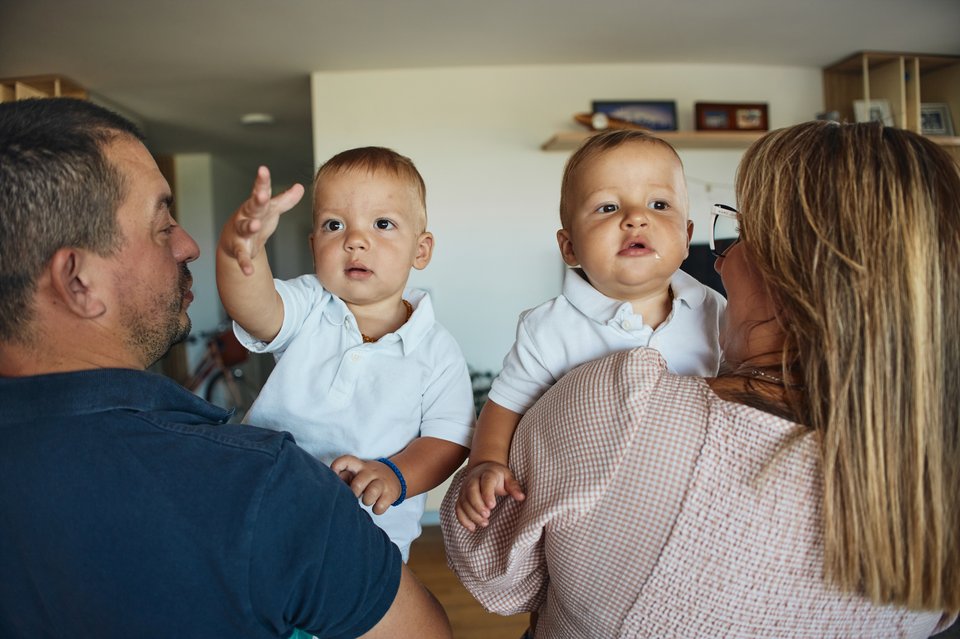
Keeping their special bond while nurturing individuality
Supporting individuality does not mean playing down how special it is to have a built-in sibling. It is about adding ‘I’ alongside ‘we’. You are helping your children feel proud of being twins, triplets or more, while knowing they are loved for their own thoughts, feelings and talents.
On tired days, this can sound like a lot, but small, regular actions do most of the work. Using names, gently nudging people away from labels, sharing one little fact about each child – these simple habits slowly change how others talk about your family. Over time, they help your children move through school, friendships and eventually adult life with a clear sense of who they are, while still cherishing that unique bond only multiples share.
Published