Key takeaways
Each child will develop in their own time, even if they share a birthday
Sharing, turn taking and teamwork are skills that grow slowly
Big emotions are normal when you have more than one toddler at once
Good enough parenting really is enough
Managing expectations about twins and triplets behaviour
The toddler and preschool years are busy, noisy and full of change. When you have twins, triplets or more, those big feelings and new milestones can feel like they are happening all at once. It is completely understandable if you sometimes feel stretched, guilty or unsure about what is realistic.
Although your children arrived together, they are still individuals with their own personalities, needs and timetables. When you keep this in mind, it becomes easier to step back, breathe and let go of the idea that everyone should be doing the same thing at the same time.
Setting gentle, realistic expectations does not mean lowering your standards. It means noticing what is typical for this stage, recognising what is possible for one adult and giving yourself permission not to be perfect.
Don’t miss what matters
Get Twins Trust news, support updates and practical resources—straight to your inbox.
What normal behaviour looks like for multiples
Even with the same age, home and routine, your children will not move through development in sync. One might chatter away early while another is still focused on climbing and exploring. One could be the first to run into the playground while a sibling hangs back to watch. This mismatch can feel worrying, but it is usually a normal part of development rather than a sign that something is wrong. Try to celebrate each child’s progress instead of comparing them.
Between about one and four years old, sharing is a skill in progress. Your children spend a lot of time together, so it is natural that they want what the other one has. They may compete for toys, space or your lap. Arguments or scuffles do not mean you have failed as a parent. They are part of how children learn about taking turns, waiting and respecting other people’s things.
Big emotions are also a normal part of this age. Tantrums, tears and shouting often appear when children are tired, hungry or frustrated. With more than one small child, those emotions can bounce around the room. One meltdown can quickly turn into two or three. Your calm voice and steady presence will slowly teach them how to calm themselves, even if it does not feel that way in the moment.
It is also worth remembering that your children do not have to enjoy everything together. They might love each other dearly and still need breaks. Over time, they will show you their different interests and personalities. Allowing for these differences helps to reduce rivalry and gives each child space to grow.
Get more from Twins Trust
Free membership gives you access to additional resources and practical guides.
Practical ways to support your children
There are simple, everyday things you can do to support behaviour without needing to be a perfect, endlessly patient parent. Sometimes it is as straightforward as having two of a favourite toy, or rotating toys so there is less to argue over. Talking through what is happening, in simple language, helps your children understand: you might say, “it is your turn now, then it will be your brother’s turn”.
When emotions run high, try to respond to one child at a time, even if more than one is crying. Use short phrases and name what you see, such as “I can see you are very cross” or “you look really sad”. Then move to the next child. You are teaching them that everyone’s feelings matter and that you will get to them as quickly as you can. It is also important to point out the positive emotions as well, “it looks like that has made you feel really happy”.
Whenever you can, offer small pockets of one-to-one attention. This could be reading with one child while another plays nearby, taking turns to come to the shop with you or letting them choose different books or activities. These small moments can make a big difference to how secure and seen they feel.
You might find it helpful to:
- Notice and praise any moment of cooperation, however small
- Set up simple shared jobs like tidying up toys together
- Use games where they can join in side-by-side rather than needing to share everything
Teamwork will grow over time. Children usually play alongside each other before they truly play with each other, so try not to rush this stage.
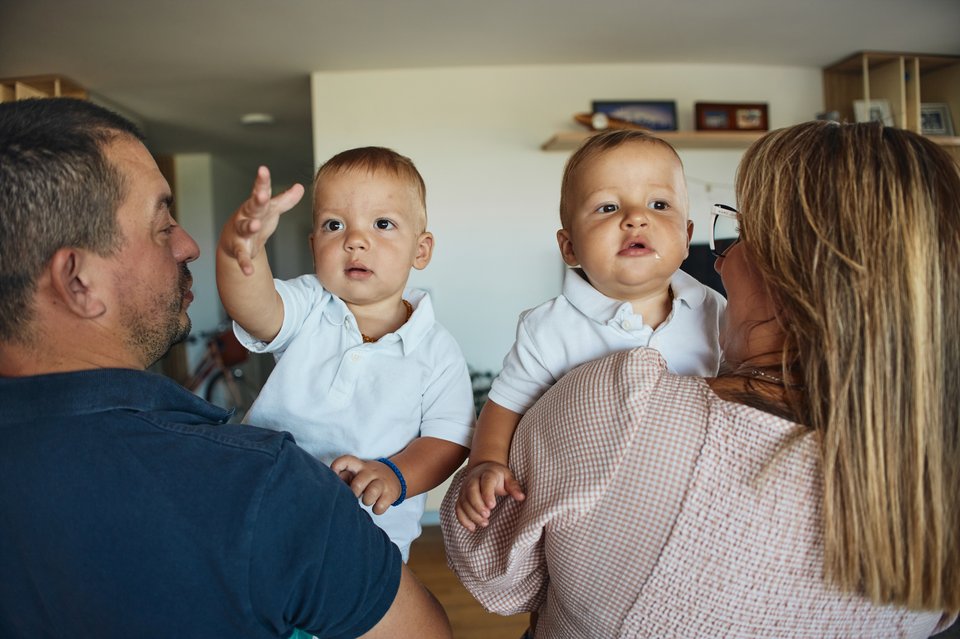
Being kind to yourself as a parent of multiples
Parents of multiples often feel pressure to manage everything calmly, stay on top of routines and meet every child’s needs at once. The truth is, no one can do that all the time. You are allowed to make choices about who needs you most in that moment. It is okay if one child has to wait while you cuddle or calm a sibling, as long as everyone is safe.
You are only one person, and that is enough
Looking after yourself is part of looking after your children. Short breaks, a hot drink in peace or a chat with another adult can help you reset. Accepting offers of help, or asking for it, is a strength not a weakness. A calmer, more rested parent is good for everyone.
This stage will not last forever. As your children grow, their language, understanding and independence will develop. Arguments usually become easier to talk through, and they will learn more ways to cooperate, comfort each other and play together.
If you would like more support with behaviour, you can explore our behaviour course (LINK) or call our helpline (LINK) to talk to other parents who understand and have been there. You are doing better than you think!
Published