Key takeaways
The ‘terrible twos’ can be very real, especially with more than one toddler at once
Big feelings and boundary testing are normal at around two
Predictable routines and clear, consistent limits can reduce tantrums and power struggles
Supporting each child’s need for fairness and independence can make daily life feel calmer
If you’ve heard people talk about the ‘terrible twos’, you might be wondering if it’s a myth or a phase you’re about to face head on. The truth is, it can be a very real stage for many families.
When you’re parenting twins, triplets or more, it can feel even bigger because you’re supporting more than one toddler through the same leap in development.
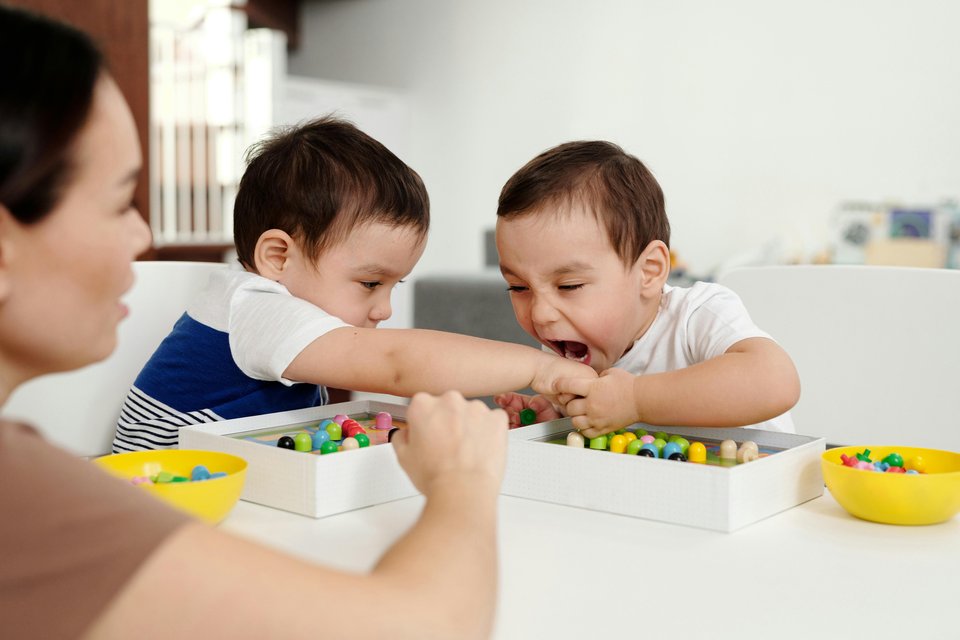
At around two, children are learning fast. They’re starting to understand more, want more independence and feel frustrated when they can’t do what they want. That combination can lead to meltdowns, shouting, hitting or refusing to cooperate. It doesn’t mean you’re doing anything wrong. It usually means your children are learning how the world works and testing where the boundaries are.
This stage can also bring lovely moments. You might notice more play, more words and more connection. It’s rarely ‘all bad’. It’s just intense.
Twins Trust Premium Members can access our play booklet [opens as PDF] which is packed full of tips and advice on encouraging positive play in your twins, triplets or more. If you're not a member yet you can join now for access.
What your toddlers are learning at around two
Around this age, many children begin to show new social skills. They may start to understand how to play alongside others and sometimes with others too. With twins or triplets, you might see bursts of cooperation, copying and shared games, followed by conflict over a toy or a turn.
Language often takes a big step forward. Your children may have improving verbal skills, but they might not always fully grasp the concepts they’re trying to express. That can look like arguing over ‘mine’, insisting something happened when it didn’t, or becoming upset because you’ve misunderstood what they meant.
You’ll often see a strong drive for control and independence. They may want to choose their clothes, pour their own drink or do the opposite of what you’ve asked. At the same time, fairness becomes a big deal. Your children might get upset if they feel something is ‘unfair’, even if it looks equal to you.
When you add in shared attention, shared toys and shared space, it’s understandable if emotions take over.
Feel more confident managing behaviour
Discover expert-led strategies to reduce challenging behaviour and make life at home feel calmer and more manageable with our behaviour on-demand course.
Why life can feel harder with more than one toddler
With more than one child at the same stage, the triggers can stack up. One child melts down and the other joins in. One child needs comfort while another needs a boundary. You might also find that your children set each other off, especially if one is more sensitive to noise, change or frustration.
It can also feel relentless because there’s less chance to reset. A single toddler tantrum can be draining. Two or three in a row, or at the same time, can feel impossible at the time.
If you’re feeling stretched, it’s worth reminding yourself: toddlers borrow your calm because they don’t yet have their own. You won’t get it right every time. What helps most is having a plan for the moments you know are coming. Take a look at our behaviour on-demand course which offers strategies in how to deal with these moments or if you are a Premium Member you can come along to one of our expert drop-ins specific to dealing with challenging behaviours.
Real stories from your community
Support provides lifeline for parents tackling twins' behaviour issues
Helene shares how support from Twins Trust, including completing a behaviour webinar, helped her deal with issues she was tackling with her twins.
Practical ways to reduce tantrums and boundary testing
These approaches can help you support your children’s growing independence while keeping everyone safe.
Try these ideas first:
- pick your battles and focus on safety and kindness
- give warnings before turn-taking or ending an activity
- plan ahead so you avoid starting something they can’t finish
- name emotions during play and model what to do with big feelings
Helping you feel more confident through this stage
If the ‘terrible twos’ are hitting hard, it can help to zoom out. This stage is often a sign of healthy development: your children are learning independence, communication and social rules, even if it looks messy.
A few final pointers can help day-to-day:
- keep routines predictable where you can, especially around sleep and meals
- aim for consistency with boundaries, even if you keep the language brief
- look after yourself too, because you can’t pour from an empty cup
If you’re worried about aggression, speech, sleep or behaviour that feels extreme, trust your instincts and seek support from a health professional. You deserve to feel supported, not judged.
You’re doing a demanding job. With time, repetition and reassurance, your children will learn what you’re teaching them: how to cope with big feelings and how to get their needs met in safe ways.
We've got you
If you need to talk things through, we're here to help. Our trained helpline volunteers are here to listen and everyone you speak to is a parent of twins, triplets or more, so they get it.
Published