When new mum Ashley didn’t feel herself after the birth of her twins, she wasn’t sure why. Everything, she said, ‘felt up in the air’.
It was only when a therapist suggested she might be experiencing birth trauma that Ashley began to understand what was happening.
Despite feeling unwell during pregnancy with bouts of sickness, Ashley’s pregnancy was healthy overall. “At about 33 weeks, I was in and out of hospital and I kept having my regular scans every two weeks. The babies arrived at 36 weeks, in August 2021. I was booked in for a C-section as they were both breech pretty much through the whole pregnancy. But then the babies turned and the consultant said nothing should go wrong. I was told I would be induced. The next day labour came on thick and fast. I knew I needed to push, I knew the feeling from when I had my first son. I was about 6cm dilated.”
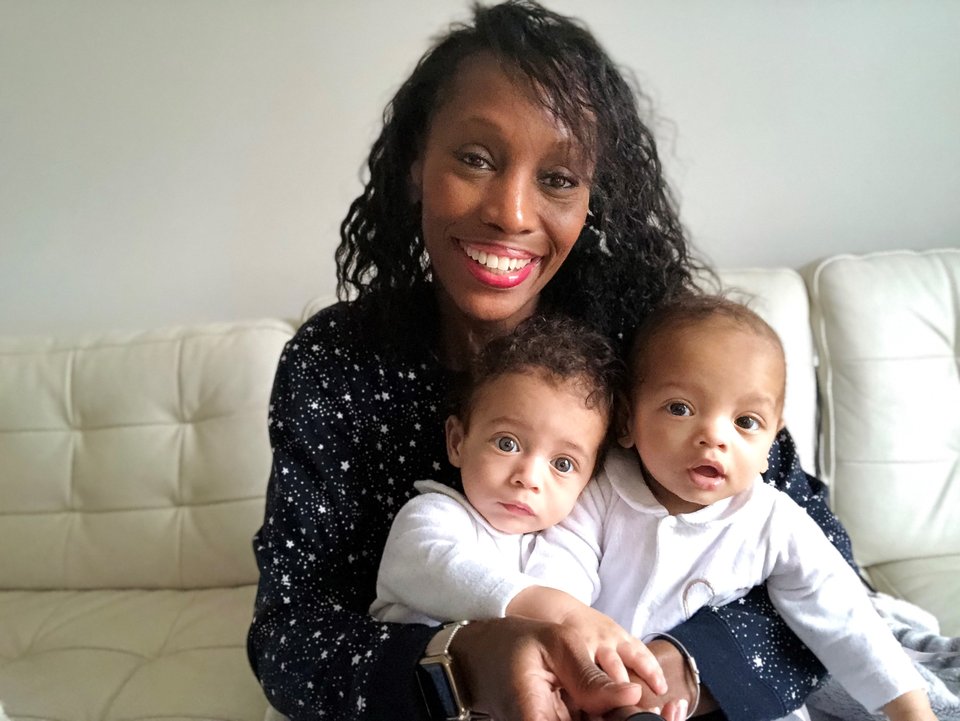
Then everything changed. Ashley recalls the moment the emergency button was pressed: “From then on it was like chaos. The babies were coming and I was rushed down to theatre. I was going to have an epidural but the anaesthetist didn’t get to me in time. They wheeled me into the room and within five or 10 minutes, Freddie pretty much flew out. Sydney wasn’t coming and then Freddie was taken away.
“Someone was holding my head, another holding my belly. I wanted someone to say what was going on. They said they were seeing if I needed a C-section. I didn’t know if the hospital had been in that situation before. When I knew I was having twins, I asked what the chances were of me having one natural and one C-section, apparently it’s very rare.”
Ashley was told she would need a C-section and be put under general anaesthetic. What followed felt like an ‘out of body experience’.
Don’t miss what matters
Get Twins Trust news, support updates and practical resources—straight to your inbox.
“They thought I would wake up after the C-section after 45 minutes, but I didn’t wake for four hours. I looked at the time and I didn’t know where my daughter was, but I could see my partner holding Freddie and then I saw Sydney was there.”
After a few days in hospital, Ashley returned home and realised she needed time to process what had happened.
“It all started to take its toll. I was looking after others before myself. I started to have therapy and realised it was birth trauma. I had never suffered with my mental health before, so this was all brand new. This was a time when my partner and I were meant to be enjoying this new life but everything was up in the air and I didn’t know if I was coming or going. It was the complete opposite to how I expected it to be.”

After speaking to her health visitor and therapist, Ashley finally had a name for what she was feeling. “It didn’t even occur to me that it could have been birth trauma. The therapist said she thought I had birth trauma and I looked into it and knew that sounded like what I had. I had to take time off work. I was still happy with my kids, thankfully. I had the love for my children and I bonded with them. But everything with me just wasn’t me. There was something going on, not my normal state, and things were getting on top of me.”
Ashley tried to piece together what happened during the birth. “I knew what was happening as I was put to sleep but when I woke up, I didn’t know what had happened. They didn’t go through what had happened in hospital and debriefs are really needed. There are still parts I can’t remember. I still ask my partner questions about what happened now, years on from their birth. I wrote about it on my Instagram and so many mums contacted me saying it had happened to them – birth trauma needs to be talked about. Some days when I talk about it, I feel angry. Sometimes I don’t think I am through it but I know I am a good parent.”
Cognitive Behavioural Therapy (CBT) sessions helped Ashley process her experience. She says: “I want to make it clear to people that they aren’t on their own and it’s so important to talk about birth trauma.”
Talk to someone who truly gets it
Twins Trust’s free helpline is run by trained volunteers who have multiples themselves. Call for a friendly, confidential chat or message via WhatsApp or email anytime and they’ll reply during opening hours (Mon–Fri, 10am–1pm & 7pm–10pm, excluding bank holidays).