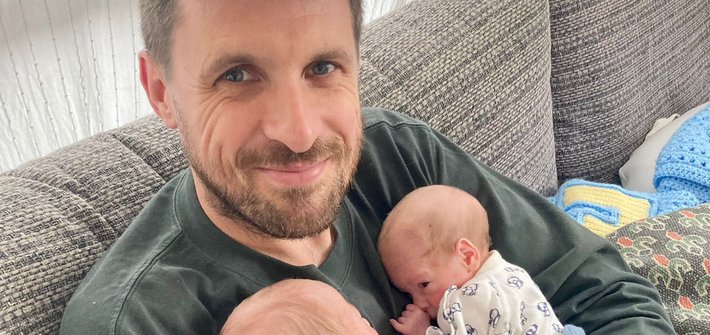
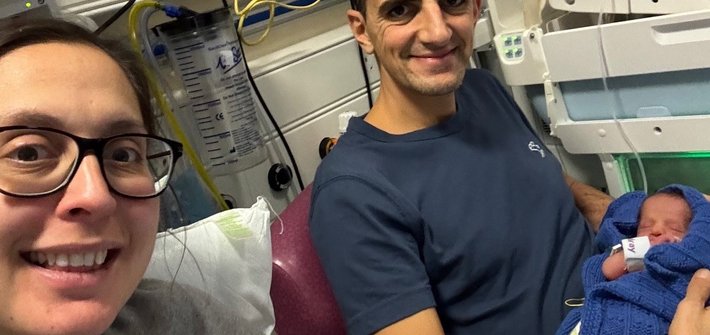
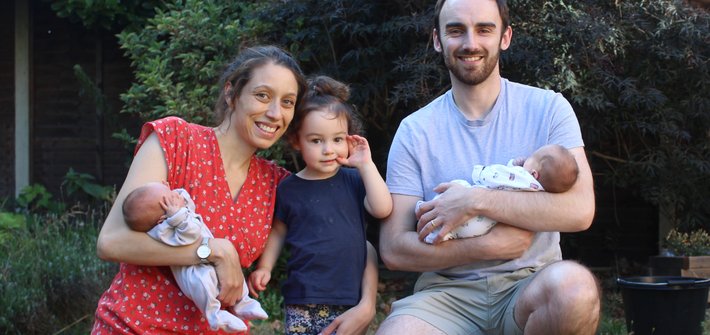
When Darren and Victoria’s twins were diagnosed with Twin-to-Twin Transfusion Syndrome (TTTS) during pregnancy, they desperately wanted to find out more about the condition.
Thanks to the healthcare professionals who supported them, plus resources on the Twins Trust website, the couple learned about the options available to them when faced with a TTTS diagnosis.
TTTS is a rare but life-threatening condition that affects 10 to 15% of identical twins that share a placenta (monochorionic twins). TTTS can also occur in triplet or higher order pregnancies with monochorionic twins.
After the initial shock when they found out they were having twins, the couple began to prepare for their arrival. Their 16-week scan revealed there was no visible kidneys or bladder for one twin, plus increased fluid in the other twin’s sac. It was later confirmed as TTTS.
Victoria said: “I think it’s good to have honest conversations with each other as a couple. I had never heard of TTTS before so I tried to educate myself. I was never pushed into any decisions, everyone at the hospital was very open minded. They never rushed me.”
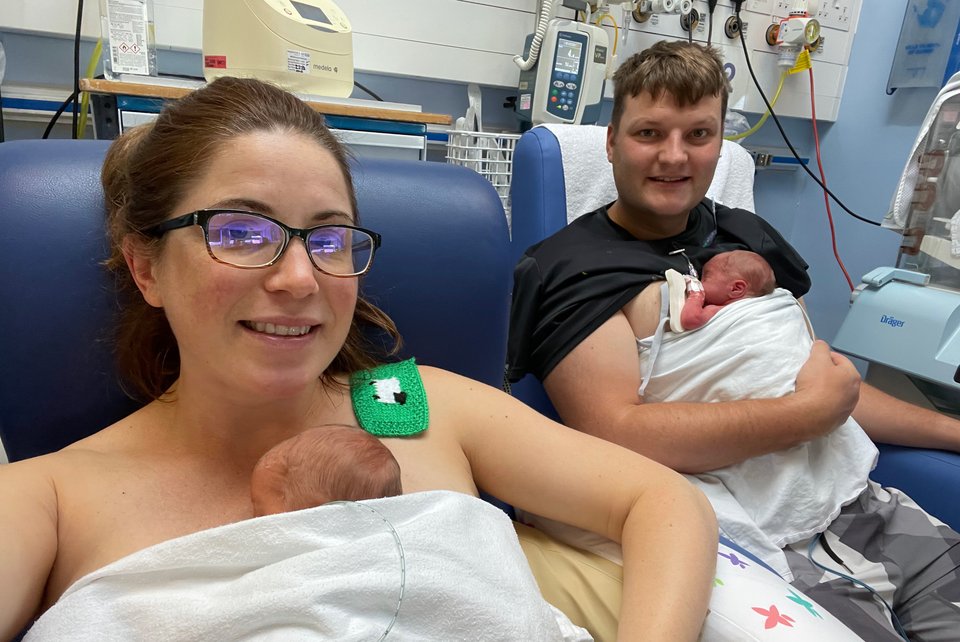
Victoria said the Twins Trust website helped to educate her about TTTS. She added: “At that point I hadn’t heard of TTTS, that’s when the Twins Trust website was helpful to find out more and read stories about other people. We had seen a poster at hospital about Twins Trust. I did feel very lonely and quite confused and the website was really helpful.”
Darren said: “We were given three options – have the laser surgery, do nothing or termination. Having a termination was never in our heads.”
A week after the TTTS was confirmed, Darren and Victoria decided to go ahead with specialist laser surgery.
She said: “We knew it could rapidly escalate and they were worried about one of the twins. The other twin’s sac was getting bigger and bigger.”
Just days after the surgery, the couple returned to hospital and were relieved to hear it had been successful. Darren said: “The surgery was unbelievable. It was a weird experience but it was amazing, seeing the camera going into the womb. The staff were amazing at St. Michael’s Hospital in Bristol. Mark, Sarah and the nurses were fantastic and gave us the time, information and space needed during that tricky time when we had the surgery.”
You belong here
Our community of families with twins and triplets is unique. We lean on each other, cheer for one another and together we're stronger. Join today as a Free or Premium Member.
Following the surgery, Victoria started losing fluid and had a number of bleeds over a couple of weeks. She said she was losing fluid ‘like a leaking tap’ and faced three visits a week to hospital. At week 33, more bleeding occurred and that’s when she returned to hospital.
The boys, Ezra and Arlo, were born via C-section in September 2023, surrounded by 26 members of staff in theatre.
Victoria said: “It went really well. They were born at 34 weeks and one day. We stayed in hospital in NICU for about a month and intensive care for a couple of weeks. They were transferred to low dependency for a couple of weeks.”
Ezra and Arlo are doing well and have faced other medical issues, including having surgery on hernias.
Victoria said: “I enjoy taking the boys to clubs and I don’t let the fact I have twins stop me doing anything.”
Learn more about TTTS
TTTS is a rare complication in shared-placenta multiple pregnancies. Our advice can help you find signs to watch for, learn how scans diagnose it and what specialist treatments can support your babies and you.