When Stephanie and her husband Louis first discovered they were expecting twins, it was an exciting yet overwhelming moment.
Their early pregnancy scans revealed that they were having MCDA (Monochorionic Diamniotic) twins, meaning the babies shared a placenta but had separate amniotic sacs.
At their 16-week scan their doctor mentioned Twin-to-Twin Transfusion Syndrome (TTTS) but didn’t explain the full implications of the condition. At that point, Stephanie and Louis were told their twins were at higher risk, and the frequent scans began.
Understanding the high risks and seeking help
Stephanie’s journey took a significant turn when, at the 16-week scan, the medical team discovered that one twin was not growing as expected and had very little amniotic fluid around it. This was a clear sign that TTTS had developed, a serious condition where one twin essentially "drains" blood and nutrients from the other.
The couple was referred to St George’s Hospital in London for a specialist procedure known as laser ablation surgery, which could help correct the condition and save their twins.
Despite the medical urgency, the procedure wasn’t without risk. At 16 weeks, the doctors preferred to wait until 17 weeks before performing the surgery to improve the chances of success. For Stephanie and Louis, every day was a waiting game, filled with uncertainty.
Their hopes were pinned on the surgery, which they were told had a high likelihood of saving their first twin, but the survival chances for the second were less certain. Yet, without surgery, the doctors warned, both babies would likely not survive.
A moment of relief and the road to recovery
The decision to move forward with the surgery was both a relief but also a journey into the unknown. Stephanie describes the moment of relief when, just a week after the surgery, they learned that everything had started to improve. The scans showed that both babies were responding positively.
You belong here
Our community of families with twins and triplets is unique. We lean on each other, cheer for one another and together we're stronger. Join today as a Free or Premium Member.
Over the following weeks, the pregnancy was closely monitored, with scans every two weeks to track the progress of both babies. Stephanie described the process as being focused on one step at a time, constantly checking for improvements, until she could finally feel hopeful again.
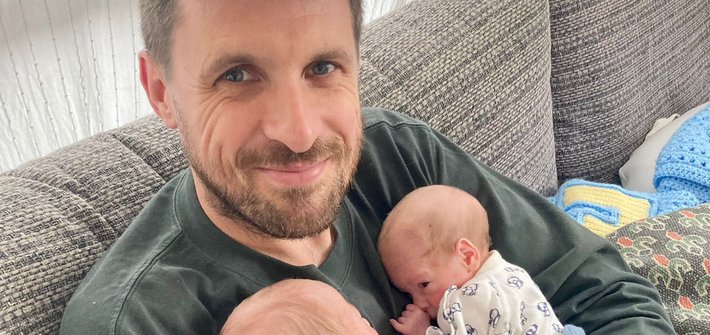
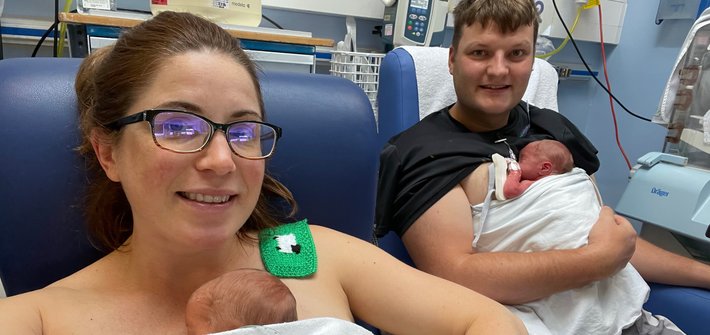
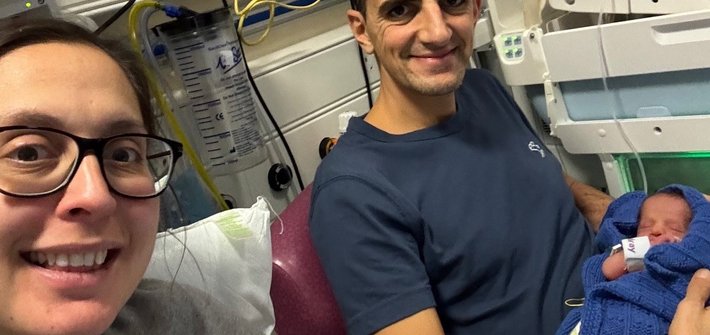
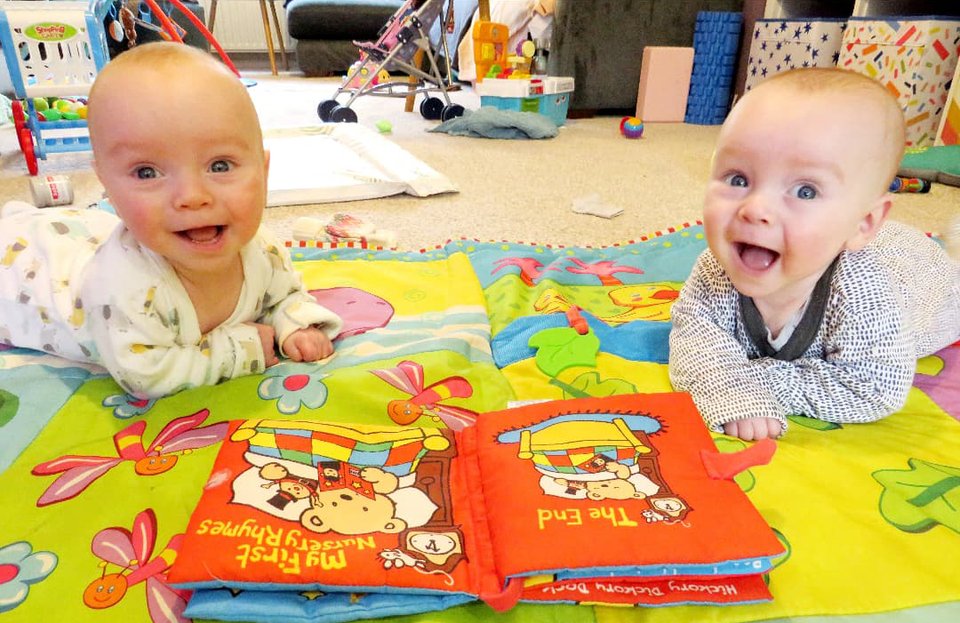
By the time the twins were born at 33 weeks, the situation had improved dramatically. Max and Sam arrived early, but they were strong enough to face life outside the womb, although they spent the first three weeks of their lives in the Neonatal Intensive Care Unit (NICU).
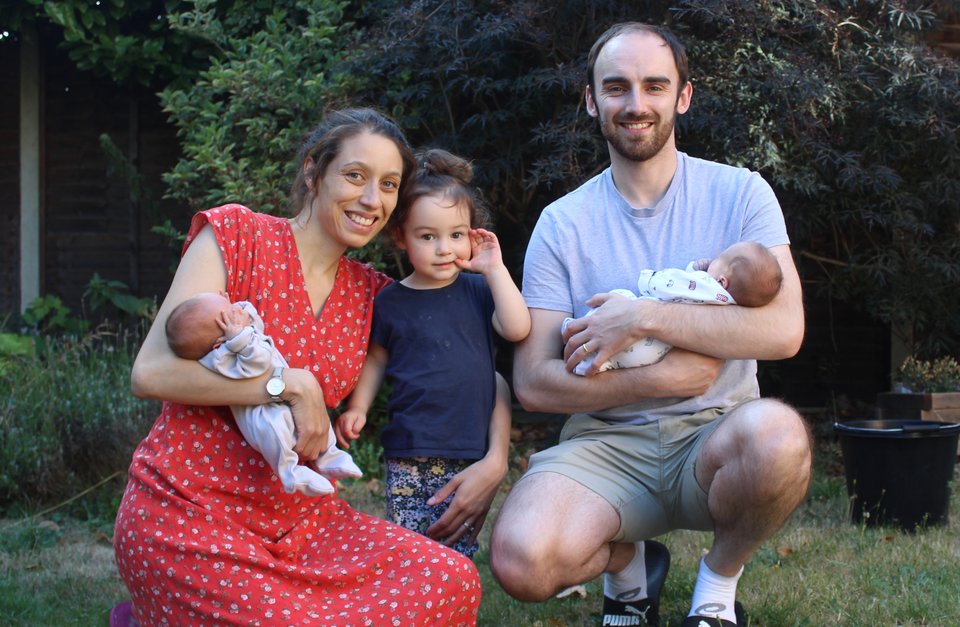
For Stephanie and Louis, the experience was far from what they had imagined for their family’s first months, as they navigated the delicate balance of hope and worry. Yet, thanks to the medical intervention and ongoing support, both boys eventually made it home, much to the joy of their big sister Georgia.
Support through uncertainty: finding strength in community
Throughout this challenging journey, Stephanie turned to Twins Trust for support. The charity was recommended by a family member and became an essential part of her support network. Through Twins Trust, Stephanie was able to connect with other parents facing similar challenges.
Attending a twin club helped her feel less alone and gave her a space for the fear and confusion she was experiencing. For Stephanie, the information, guidance, and community support she received made all the difference during an uncertain time.
In sharing her story, Stephanie hopes to offer hope and reassurance to other parents who may find themselves facing the same difficult circumstances. She emphasises that while the journey through a complicated multiple pregnancy can be filled with uncertainty, knowing that there is a network of support - whether medical or community-based - can make all the difference in helping parents navigate these challenges.
About neonatal care
Understand what neonatal care involves for twins, triplets or more, the different unit levels, how babies move between wards and how you can stay involved if one goes home first.