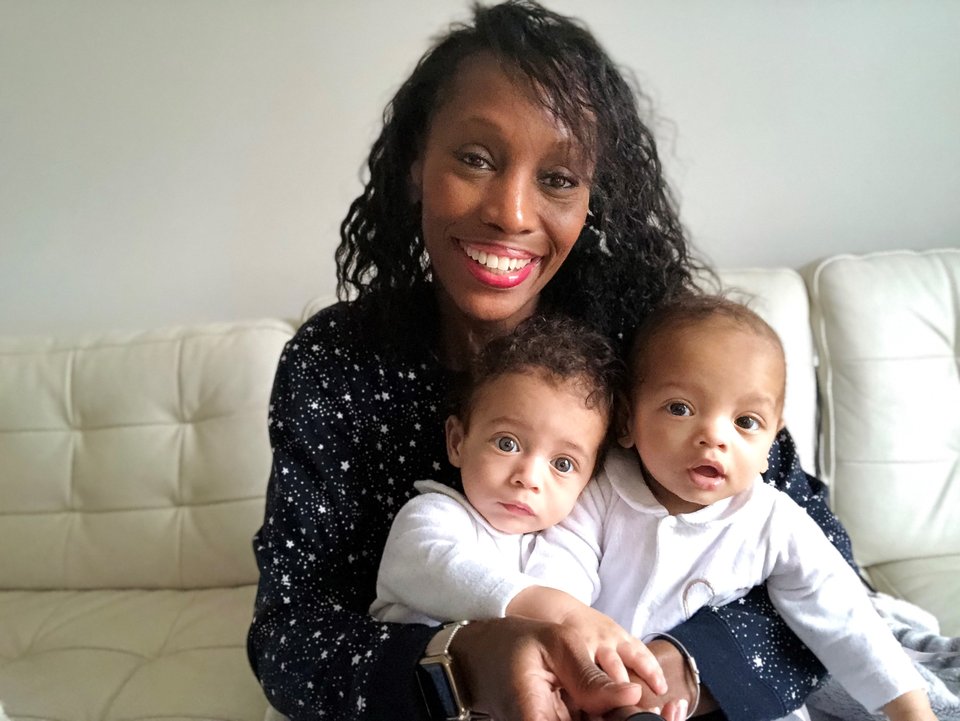
Estella and her wife Faye embarked on their journey to parenthood through IVF (in vitro fertilisation). After marrying in August 2018, they quickly decided to start a family. “Faye and I married in August 2018 and, not long after, we decided we wanted children. We both went to a clinic in London for the initial tests," Estella shared. While Estella was initially content for Faye to carry the baby, they eventually decided that Estella would be the one to carry their child.
One of their biggest early challenges was finding a suitable sperm donor, as Estella is A-rhesus negative. “My mum had me in a rhesus ward when I was born, and although I know injections are available if the sperm is from a positive blood group, we didn’t want any more intrusion, given that we would already be having IVF. So we focused on finding a donor with the correct blood group,” Estella explained.
If you’re considering IVF or have conceived through fertility treatment, it can help to have clear, practical information and a place to talk things through. Twins Trust has guidance and support for parents and parents-to-be,. You can also find connections on the online communities (LINK to LGBTQIA+ group)
Finding the right donor
The couple found a suitable sperm donor in America and began their treatment in March 2019. Despite concerns about her age and egg production, Estella’s IVF process was surprisingly successful. “I was worried that, given my age at the time, 38, I wouldn’t produce many eggs because I didn’t have lots of follicles. But 15 eggs were collected, 12 fertilised and 10 made it through to the suitable stage as blastocysts,” Estella recalled.
The first embryo transfer did not result in pregnancy, and the couple faced immense disappointment. “The first transfer didn’t work and we were incredibly saddened by it. I have short cycles of 23 days and I suspect that, by having a fresh transfer, my body was getting ready for my period and that’s why the blastocyst didn’t implant,” Estella said. Despite this setback, they turned to the free counselling provided by the clinic and decided to try again.
For their second attempt, they transferred two embryos to increase their chances. Estella also used a strong drug to shut down her ovaries, which was expected to increase the likelihood of success. “To our pleasant surprise, at the seven-week scan we saw two heartbeats. We were ecstatically happy with the news,” Estella shared. This moment marked a significant turning point in their journey.
Don’t miss what matters
Get Twins Trust news, support updates and practical resources—straight to your inbox.
The early months with twins
Estella’s pregnancy was physically challenging, especially with the added stress of commuting to work as a divorce lawyer. She faced multiple health complications, including suspected gestational diabetes, liver and kidney problems, pre-eclampsia, and sciatica.
“By the end, I was wheelchair-bound,” Estella said. Despite the difficulties, the couple was thrilled when their twins, Isla and Quinn, were born on 23 March 2020, just as the UK entered lockdown due to the COVID-19 pandemic. Isla weighed 5lbs 14 and Quinn weighed 8lbs 10, but Quinn was born with two holes in his heart. “One was in the membrane but closed almost instantly. The other was in the lower chamber of his heart, near the aortic valve,” Estella explained.
In addition to the medical challenges, the twins faced dairy intolerance, reflux, and Isla suffered from severe colic for the first few months. Estella found it especially difficult when Faye returned to work, as she had to manage the nighttime feedings alone. “Feeding them during the night on my own, once Faye was back at work, was a struggle. They had to be kept upright after each feed to prevent sickness,” Estella shared.

The early months were incredibly tough for the couple, particularly because they were isolated during the pandemic. “We struggled. But we got through,” Estella reflected. The isolation made it difficult to get support from family, and their plans to have Faye’s mum move in to help were put on hold due to lockdown restrictions. Despite the challenges, Estella and Faye found ways to build a strong bond with their children.
Building strong bonds and resilience
Estella said:“The impact of Covid on us was very negative. After the twins were born, if we had any medical issues we only went to hospital in an emergency. On the positive side, we managed to build an amazing bond during that time and great routines for the twins.”
Today, Estella and Faye are incredibly proud of the people Isla and Quinn are becoming. “Isla and Quinn can be pickles, but they make us smile,” Estella shared. Despite the hardships, Estella feels stronger and more resilient. “Having twins is difficult. But I feel stronger as a person. There’s an amazing unity in the twin community that is very difficult to describe or put into words,” Estella concluded.
Talk to someone who truly gets it
Twins Trust’s free helpline is run by trained volunteers who have multiples themselves. Call for a friendly, confidential chat or message via WhatsApp or email anytime and they’ll reply during opening hours (Mon–Fri, 10am–1pm & 7pm–10pm, excluding bank holidays).