When Eliza was diagnosed with stage two Twin-To-Twin Transfusion Syndrome (TTTS) (LINK - Inf-16), she credited the information she found through Twins Trust as a vital first step in changing the outcome of her pregnancy.
In December 2021 Eliza and her husband Jonny found out they were expecting their first baby. As it turned out, she was pregnant with twins.
Their twins were MCDA, meaning they shared a placenta. This type of twin pregnancy can carry higher risks and thanks to Twins Trust’s resources, Eliza knew she needed specialist monitoring and antenatal care in accordance with NICE guidelines. Because of this, she transferred her care to Lancashire Women’s and Newborn Centre in Burnley.
Eliza said: “I read up about antenatal care on the Twins Trust website after finding out I was expecting twins. The information I read helped me to make an informative decision to change hospitals. Lancashire Women’s and Newborn Centre in Burnley provided monitoring in line with the NICE Guidance as well as having specialist knowledge and experience in twin pregnancies. This meant they picked up the TTTS very quickly and we received life-saving surgery less than 48 hours after their initial diagnosis. I believe that the level of care I received changed the outcome of my pregnancy”.
In March 2022, at 17 weeks’ gestation (following their 16-week scan) the twins were diagnosed with stage 2 TTTS. Eliza was referred to Liverpool Women’s Hospital.
TTTS is a rare but life-threatening condition that affects 10 to 15% of identical twins that share a placenta (monochorionic twins).
If left untreated, there was a 90% chance Eliza would lose both of the babies. The remaining 10% chance of survival carried over a 90% chance of severe disability, for both babies.
On the advice of the team at Liverpool Women’s Hospital, Eliza and Jonny travelled to London to St George’s Hospital where the team conducted in-utero surgery on her placenta. Laser surgery seals the excess blood vessels causing the TTTS and removes excess amniotic fluid. The family was given a 50% chance of saving both babies and 75% chance of saving one baby.
Four hours post-surgery, Eliza was scanned and much to their relief, there were two heartbeats. They began the five-hour journey back to Yorkshire. Eliza had weekly scans post-surgery back at Lancashire Women’s and Newborn Centre.
Don’t miss what matters
Get Twins Trust news, support updates and practical resources—straight to your inbox.
Though they experienced a few more scares and had another visit to Liverpool Women’s Hospital, as well as a foetal brain MRI scan on both boys at Alder Hey Children’s Hospital to ensure the laser surgery hadn’t caused any problems, they made it to 34 weeks and four days.
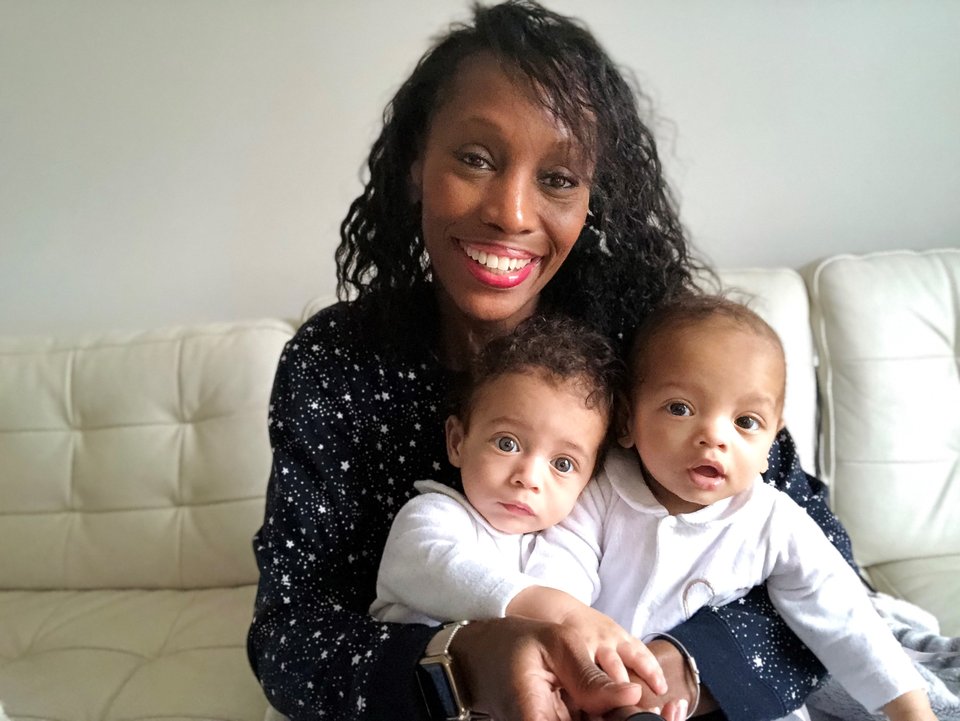
Jackson Xander Dunn and Jonah George Dunn were born weighing the exact same to the gram.
Eliza ran the London Landmarks Half Marathon with her sister Imogen to raise awareness of TTTS and also support Twins Trust’s work with maternity units, ensuring other families receive the same level of care she did.
Worried about TTTS? Learn the warning signs
Twin-to-twin transfusion syndrome (TTTS) is a rare but potentially life-threatening complication in twins (or higher multiples) who share a placenta. Understand what it is, when it most commonly occurs, and the symptoms to watch for — and if you’re worried, speak to your midwife/doctor (Twins Trust’s helpline can offer a listening ear too).