When Samantha and her husband Bart found out they were expecting identical twin boys, it felt like the greatest gift.
Samantha remembers the moment clearly: “The day before we had the first scan Bart had said ‘imagine if it was twins’. We went for our first scan and we couldn't believe it. The person scanning us said, ‘Oh, there are two in there!’ - we were in pure shock. I was terrified at first but then quickly came around to what an incredible opportunity and blessing it was to have multiples. I was starting to think about all the benefits of having twins - even the matching outfits. We bought two little cricket jumpers. We were beyond excited.”
Like many parents-to-be, Samantha began reading up on twin pregnancy and potential complications, using information on the Twins Trust website. She learned about Twin-to-Twin Transfusion Syndrome (TTTS), a rare but life-threatening condition that affects 10 to 15% of identical twins who share a placenta. At the 15-week scan, consultants diagnosed TTTS and wanted to operate the same day. A decision was made to wait until Samantha was 16 weeks.
Samantha describes the days in between as unbearable: “The whole weekend after the scan was a nervous waiting game. I wasn’t sure if our babies were going to survive until Monday.”
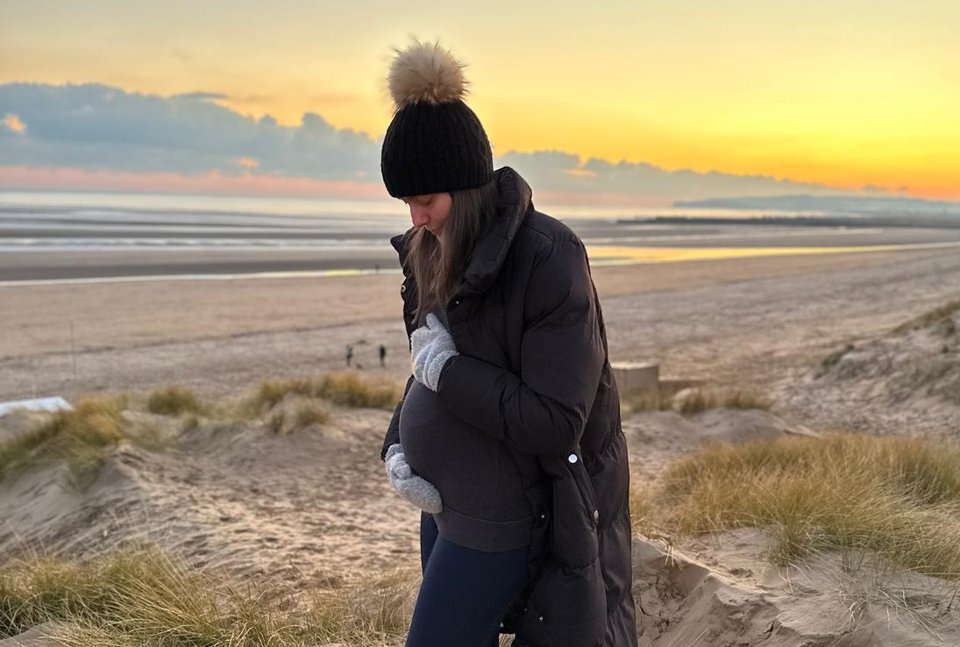
Making space for grief while keeping going
Bart and Samantha tried to prepare themselves for what could come next. Bart says: “In anticipation of the surgery, we watched a Netflix documentary - The Surgeon’s Cut: Saving Life Before Birth. I remember thinking - how do parents cope with the conflicting emotions of losing one twin and then having one that lives? - That was our reality 10 days later.”
As the TTTS worsened, surgery went ahead at King’s College Hospital, London, led by Professor Kypros Nicolaides and Professor Mina Savvidou. They watched the operation take place, holding on to every small sign of hope. Samantha says: “Although it wasn’t the best of circumstances, the positive was being able to see the babies up close with the camera in the womb. After this surgery both babies had heartbeats - much to our relief. Even with this, we knew the journey wasn’t over. They did as much as they could. We had daily check-ups and scans in the week that followed. It was the most horrifying feeling walking into the hospital every day to check if the heartbeats were still there. I was holding my breath every time.”
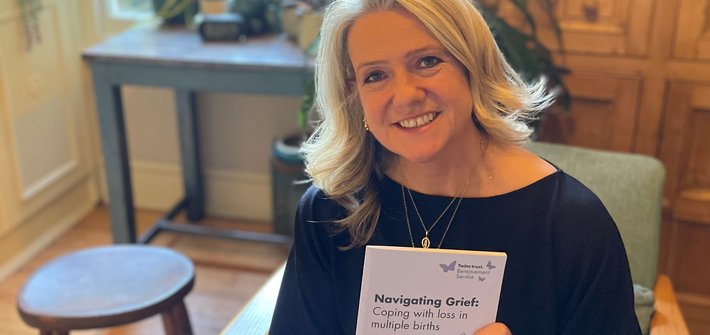
Navigating Grief booklet
The journey through grief can be incredibly difficult. Our Navigating Grief booklet is here to support all parents who have lost a baby or babies.
Later scans showed the twins had developed Twin anaemia polycythaemia sequence (TAPS). Both babies were very ill and one twin was especially anaemic. Samantha says: “Ace was extremely anaemic and we knew his chances of survival were slim. Once TAPS was identified, we had surgery hours later and subsequently Ace received a blood transfusion to the heart.”
Afterwards, Ace’s heart rate stayed dangerously high. With no further treatment available, they went home. Samantha woke in the night with a feeling she couldn’t shake. The next day, a scan confirmed Ace had died at 17 weeks.
Losing what could have been
Samantha explains how baby loss carries a particular kind of grief: “It was the absolute crush of losing a child. One of the hardest parts about losing a baby is losing what could have been. When you think about twins and the massive impact on your life. That special something was swept away.”
The pregnancy continued, and doctors remained worried about Finn. Bart says: “We were struggling at this point. We had lost Ace and wanted certainty for Finn’s future. We somehow found the strength to keep going and support each other. As time moved on, we were told Finn wouldn’t make it. We were advised to consider terminating the pregnancy as his blood flows were declining.” They spoke with multiple consultants and a supportive grief counsellor about what might happen next.
Then, against expectations, Finn began to improve. Midwives with decades of experience said they had never seen such a dramatic change. At 31 weeks, Samantha was admitted to hospital and scanned every six hours for two weeks. At 33 weeks, she went into labour in the middle of the night. Bart missed her call and rushed in after “Seven missed calls”.
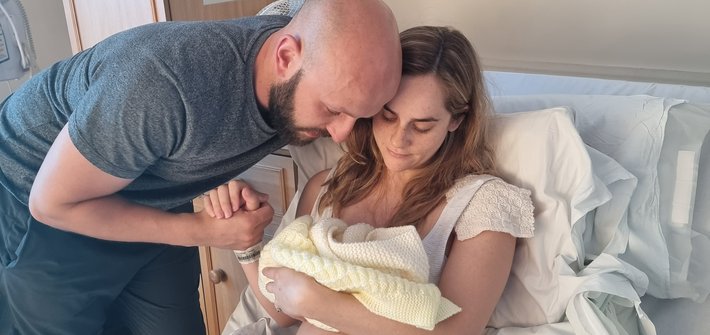
Samantha says: “Finn was born happy and healthy and Ace was born sleeping. I think there’s a misconception when you have a miscarriage with twins. The reality is that when one twin passes away, you have to carry them throughout the rest of your pregnancy. During the pregnancy I made a point to acknowledge the time I had left with them both, together - it was an extremely difficult but important experience in my life.”
Sharing the story keeps both boys present
Finn spent four weeks in NICU, with a purple butterfly sticker on his cot to show he was a twinless twin. Bart and Samantha kept Ace in a cold cot for a couple of days so they could spend time with him and say goodbye. Bart says: “I still can’t wrap my head around how difficult that experience was. It was overwhelming. Being confronted with the loss of one twin and then two minutes later, walking to the NICU to see his surviving brother in his incubator - it really was an emotional rollercoaster”. Samantha adds:
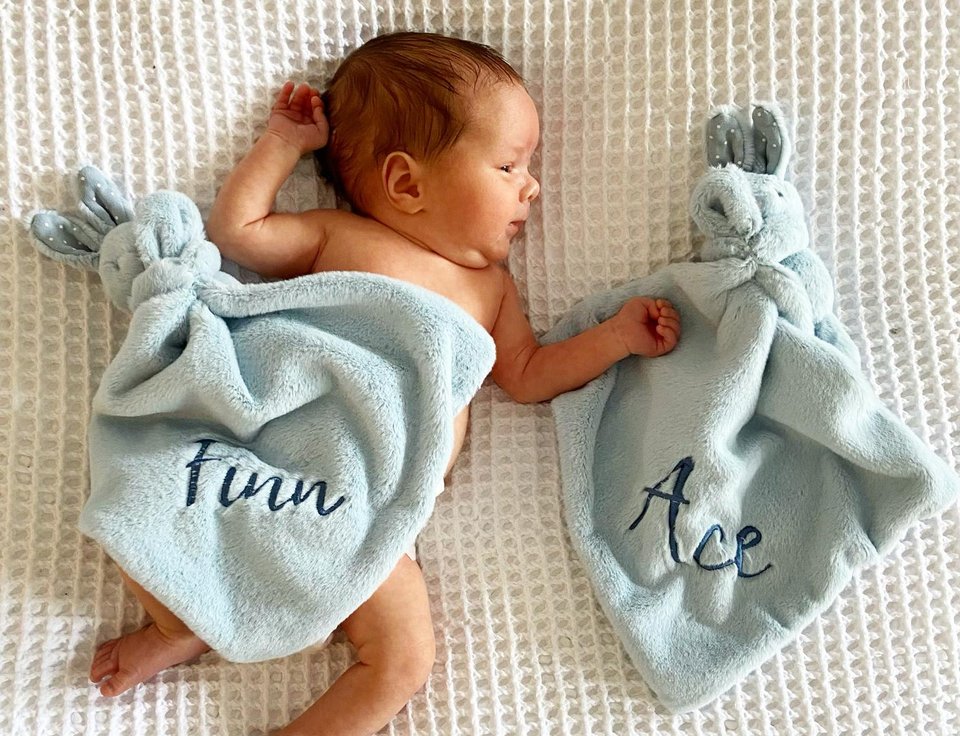
It got to the time when we had to say goodbye to Ace. It must be a mother’s instinct, I couldn’t let him be taken away. It really surprised me as I was very at peace with what had happened. I had to be out of the room when they took Ace away. I had such an emotional and physical draw to this baby.
They’ve found comfort in speaking openly about Ace and in planning how they’ll tell Finn about his brother as he grows. They also commissioned a piece of art showing two boys with halos, now hung in Finn’s room. Bart says: “Despite being a very challenging time in our lives, what has helped me most is talking to people about it, being open and sharing our experience. Samantha has posted on social media about what has happened, as have I, and people’s reactions are overwhelming. That has given us strength. Raising awareness is a part of our story. In the midst of our lowest points, we found it helpful to read and hear about others’ experiences - the good and the bad.”
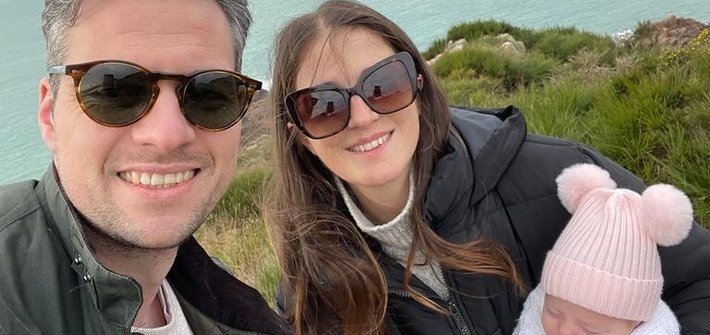
Samantha says Finn continues to surprise everyone, and Bart adds: “People who meet Finn, even if for a brief time, often share what character he has. It’s almost like he’s living his life for two.”
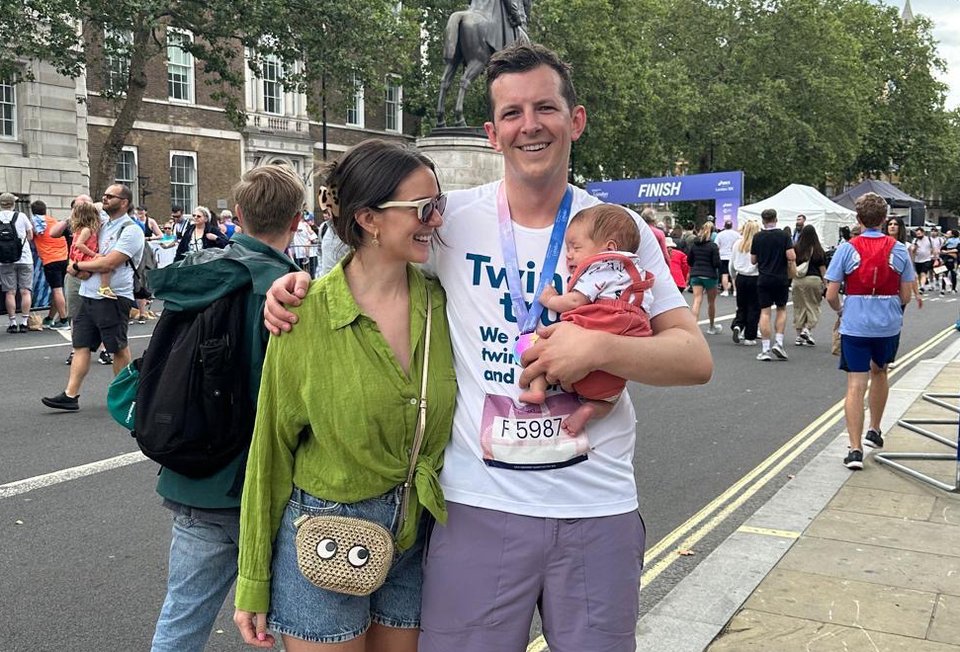
Bart joined Twins Trust as a trustee and supported the charity by completing a 10k run in July 2023, raising £3,359 in sponsorship.
Online community
Our online support community offers a safe space for parents to talk to others who have experienced the loss of a baby or babies.