Professor Christopher Lees at Queen Charlotte's and Chelsea Hospital, Imperial College London, is investigating a new treatment for twin-to-twin transfusion syndrome (TTTS) using a powerful form of ultrasound.
TTTS happens in about 10–15% of identical twins who share a placenta. The blood vessels in the placenta are no longer shared equally, so one baby becomes the 'donor' and has a reduced blood volume. This can lead to slower growth and low urine output, with little or no amniotic fluid.
The other baby, known as the 'recipient', receives too much blood. This can put strain on the baby's heart and lead to too much amniotic fluid. Without treatment, depending on the severity of the condition, the risk of the babies dying or being delivered very early is very high.
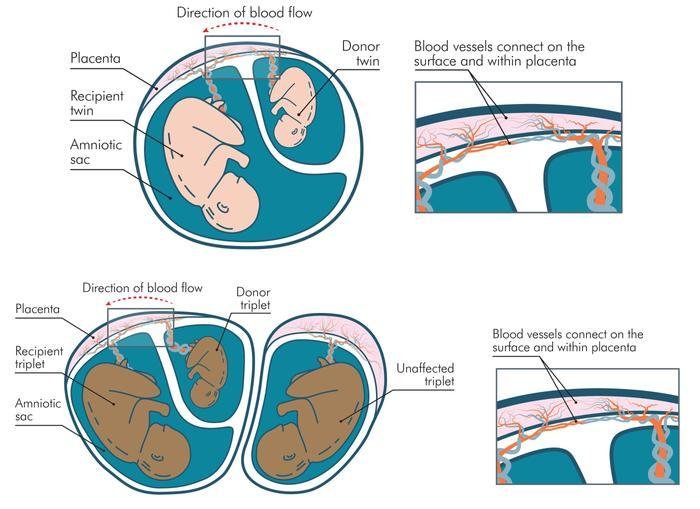
The most common treatment at the moment is laser ablation. This blocks the shared blood vessels in the placenta, helping to balance the amount of blood each baby receives. Because it's surgery, it's invasive and can lead to serious complications.
To avoid surgery, Professor Lees is exploring HIFU (high intensity focused ultrasound) treatment instead. As it does not involve an operation, the theory is that it could be safer than laser therapy. He hopes it could also mean babies can be treated earlier in pregnancy, improving their chance of survival and reducing preventable long-term harm.
Join now to keep up to date
Get our latest news, support updates and practical resources straight to your inbox - join as a Free or Premium Member today and opt-in to receive email updates.
Published